
Explore
Categories
More Categories
Money 101Learn the fundamentals of personal finance
DebtCredit card payoff & multi-debt strategy
Taxes & IncomeTake-home pay & self-employment tax
All Financial CalculatorsBrowse our complete suite of free money tools
Mortgage & HousingAffordability, buy vs rent, mortgage payments
Budgeting & CashflowBudget, cashflow & emergency fund planning
BlogPractical money tips and strategies
RetirementRetirement savings & RRSP/401(k) planning
Investing & Net WorthTrack your total financial picture
No-Fee BanksCompare fee-free bank accounts
InsuranceLife insurance coverage planning
Everyday ToolsCurrency exchange & daily habit cost
For ProfessionalsBuy pre-qualified leads in your area
Investing

Robo-Advisors vs DIY Investing: Which Is Right for You?

J
Jonathon Hyjek
Last Updated: November 23, 2026 · 5 min read
Robo-Advisors vs DIY Investing: Which Is Right for You?
TL;DR

Robo-advisors automate the decisions most DIY investors get wrong anyway. Here's when that's worth paying a small fee for, and when doing it yourself genuinely makes more sense.

Robo-advisors exist because most people's biggest investing mistake isn't picking the wrong fund — it's emotional decision-making: panic-selling in a downturn, chasing whatever did well last year, or just never rebalancing. A robo-advisor automates the boring, disciplined part of investing that most DIY investors skip. Whether that's worth paying for depends on what you'd actually do without it.

What a robo-advisor actually does

At its core, a robo-advisor takes your goals and risk tolerance, builds you a diversified portfolio (usually a mix of low-cost index funds/ETFs), and automatically rebalances it over time — selling a bit of whatever's grown and buying more of what's lagged, which keeps your risk level where you set it instead of drifting as markets move. Some add tax-loss harvesting and automatic contributions on top.
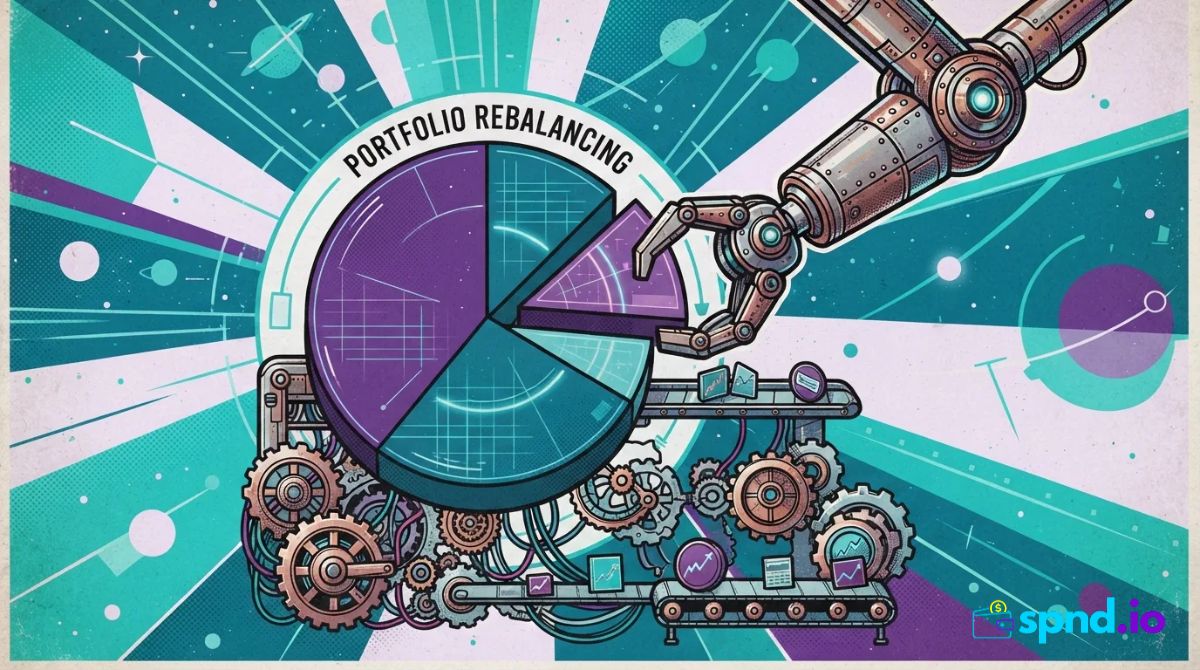
Retro robot arm automatically rebalancing a portfolio pie chart with gears and a conveyor

The case for DIY

If you're willing to learn the basics — what an index fund actually is, how to split between stocks and bonds based on your timeline, and the discipline to not touch it during a crash — doing it yourself through a basic brokerage account costs less over time, since you're not paying an ongoing management fee on top of the underlying fund costs. The DIY approach rewards people who genuinely won't panic-sell. It punishes people who think they won't, but will.

Be honest about which one you are

This isn't a knock on anyone's intelligence — it's just behavioral reality. If you've ever checked your portfolio daily during a rough week, or moved money around based on a headline, a robo-advisor's automatic rebalancing and lack of a “sell everything” button right in your face is doing real, valuable work for you. The small fee can easily pay for itself by preventing one bad emotional decision.


Enjoying this? Get more like it.

Weekly tips and tools to build wealth, straight to your inbox. Free, no spam.

By subscribing, you agree to our terms and privacy policy.

Person at a workbench hands-on building a portfolio with research books, a magnifying glass and charts

The middle ground most people land on

  • Robo-advisor for retirement accounts you don't want to actively manage — set it, automate contributions, forget about it.
  • A handful of broad index funds in a separate account if you want to learn and engage more hands-on, without betting your whole future on individual stock picks.
  • Skip anything that promises to beat the market consistently — very few professional fund managers do it reliably over the long run, and a robo-advisor isn't claiming to either; it's selling discipline and diversification, not market-beating returns.

Whichever route you pick, the thing that actually moves the needle is starting and staying consistent — not finding the theoretically optimal 0.1% fee difference. Our Net Worth Calculator is a good way to track whether your approach (whatever it is) is actually working over time, rather than obsessing over which platform you picked.

For more on the fundamentals before you decide, our Money 101 course covers the basics of risk, diversification, and time horizon in plain language.

Share this article: 𝕏 Twitter Facebook
J
Jonathon Hyjek
Founder & CEO, spnd.io

I've spent 20+ years in the trenches of personal finance — running businesses, surviving debt, and learning what it actually takes to build wealth. spnd.io is built from real-world experience, not textbooks.

Related Articles