
Explore
Categories
More Categories
Money 101Learn the fundamentals of personal finance
DebtCredit card payoff & multi-debt strategy
Taxes & IncomeTake-home pay & self-employment tax
All Financial CalculatorsBrowse our complete suite of free money tools
Mortgage & HousingAffordability, buy vs rent, mortgage payments
Budgeting & CashflowBudget, cashflow & emergency fund planning
BlogPractical money tips and strategies
RetirementRetirement savings & RRSP/401(k) planning
Investing & Net WorthTrack your total financial picture
No-Fee BanksCompare fee-free bank accounts
InsuranceLife insurance coverage planning
Everyday ToolsCurrency exchange & daily habit cost
For ProfessionalsBuy pre-qualified leads in your area
Financial Planning

When Should You Start Taking CPP or Social Security?

J
Jonathon Hyjek
Last Updated: November 18, 2026 · 5 min read
When Should You Start Taking CPP or Social Security?
TL;DR

Claim early and get smaller payments for longer, or wait and get bigger payments for less time -- the breakeven math matters more than the instinct to just take it as soon as you can.

Both CPP in Canada and Social Security in the US let you start collecting earlier than the standard age for a permanently reduced monthly amount, or delay past it for a permanently increased amount. The instinct for most people is to take it as soon as they're eligible -- but that instinct ignores the actual math behind the tradeoff, which depends heavily on how long you expect to live and what other income you have.

The basic tradeoff

Every year you delay claiming (up to a limit), your eventual monthly payment increases by a meaningful, locked-in percentage. Claim early and you get a smaller cheque, but you get more of them -- more total payments over a potentially longer collection period. Delay and you get a bigger cheque, but fewer total payments if your collection period ends up shorter. There's a breakeven age where, if you live past it, delaying ends up paying more in total; if you don't, claiming early paid more in total. The catch is nobody knows their own breakeven age in advance.
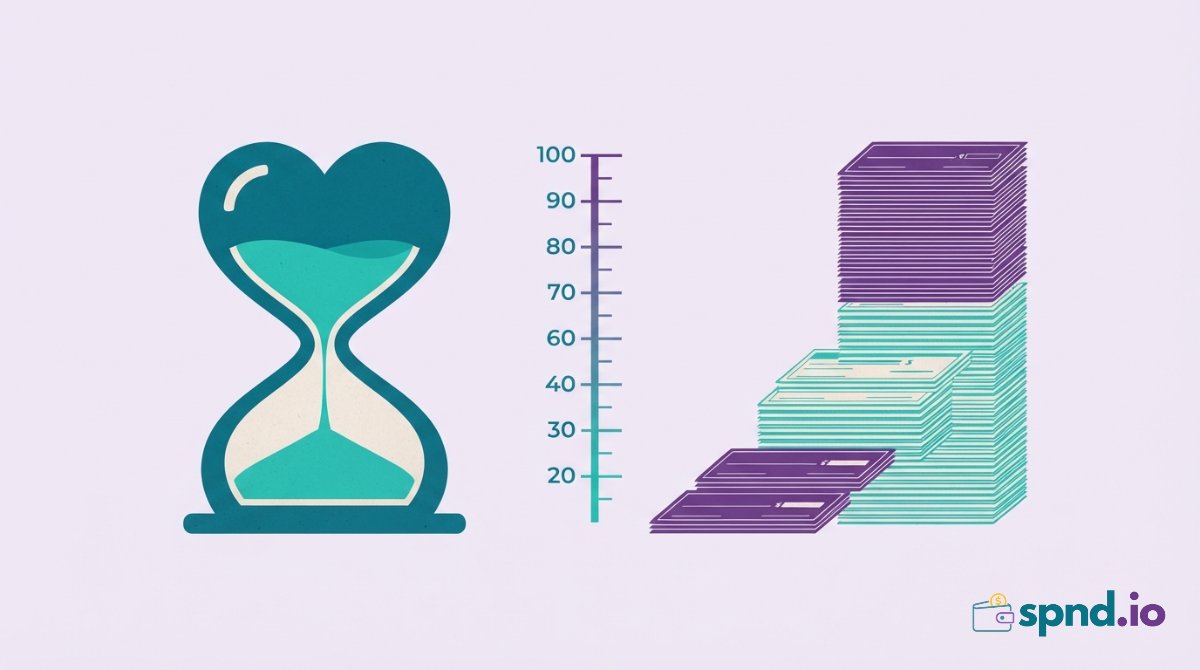
Heart-shaped hourglass beside a chart of monthly pension checks growing taller the longer they are delayed

What should actually drive your decision

Health and family longevity matter more than almost anything else here -- if you have reason to expect a shorter-than-average retirement, claiming earlier often makes more sense regardless of the theoretical math. If you're in good health with family history suggesting a long retirement, delaying tends to pay off, especially since these benefits are often one of the only sources of retirement income that's inflation-adjusted and guaranteed for life, which becomes more valuable the longer you're drawing on it.


Enjoying this? Get more like it.

Weekly tips and tools to build wealth, straight to your inbox. Free, no spam.

By subscribing, you agree to our terms and privacy policy.

It's rarely an isolated decision

If you're still working, claiming early while still earning income can trigger a temporary reduction in your benefit in some circumstances (the specific rules differ between CPP and Social Security, and change periodically, so check the current rule for your situation rather than assuming). If you have other retirement savings you could draw from instead, delaying CPP/Social Security while living off those other accounts first is a common and often sensible strategy -- it lets your eventual guaranteed benefit grow while you're using savings you control more directly in the meantime.

Couple standing where two paths merge into one road, with a calculator and stacked monthly checks

For couples, it gets more layered

Spousal and survivor benefit rules mean the higher-earning spouse delaying can sometimes protect the surviving spouse with a larger guaranteed benefit later -- this is genuinely worth a real conversation with an advisor rather than two individual decisions made separately.

Model it before you decide

Our Retirement Calculator lets you see how different claiming ages interact with your overall savings and spending plan, rather than looking at the claiming decision in isolation. And if your situation involves a spouse, other pensions, or isn't straightforward, a financial planner can run the specific numbers for your household instead of a generic rule of thumb.

Share this article: 𝕏 Twitter Facebook
J
Jonathon Hyjek
Founder & CEO, spnd.io

I've spent 20+ years in the trenches of personal finance — running businesses, surviving debt, and learning what it actually takes to build wealth. spnd.io is built from real-world experience, not textbooks.

Related Articles