Emergency Fund vs Paying Off Debt: Which Comes First?
The honest answer is usually both at once, in a specific order. Here's a real framework for deciding between an emergency fund and high-interest debt.
Financial insights, tips, and strategies to help you take control of your money
The honest answer is usually both at once, in a specific order. Here's a real framework for deciding between an emergency fund and high-interest debt.
Too much in chequing is dead money earning nothing. Too little risks overdraft fees. Here's a practical framework for splitting the two.
Canada's RESP and the US 529 plan both help you save for a child's education tax-efficiently — but they work differently. Here's the plain-English breakdown.
Willpower is a terrible savings strategy because it runs out by the end of the day. Here's what actually works: removing the decision entirely.
Down payment saving feels impossible until you turn one scary number into a monthly target with a dedicated account and automated transfers.
Locking your money in a GIC or CD usually pays more — but only if you won't need it early. Here's how to decide which option actually fits.
"High-yield" just means meaningfully more than a traditional bank pays — which is a low bar. Here's what actually determines a good savings rate.
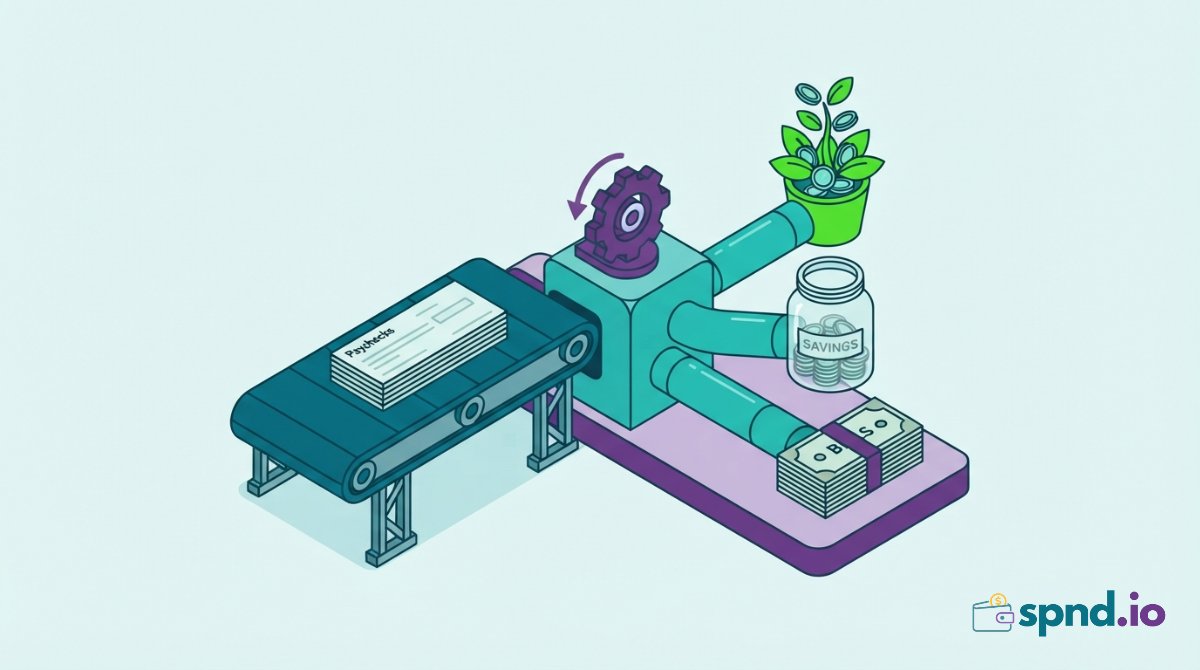
Automation is the single biggest predictor of long-term savings success. People who automate transfers to savings and retirement accounts save 2-3x more over a decade than people who rely on manual transfers, because automation removes willpower and decision-making from the equation. Set it up once on payday, and it works for decades.
The best place to keep an emergency fund is a high-yield savings account (HYSA) at an online bank, earning 3-5% APY in 2026. These accounts are federally insured, completely liquid, and often have no fees or minimum balances. In Canada, a TFSA held as a high-interest savings account provides similar flexibility with tax-free growth.