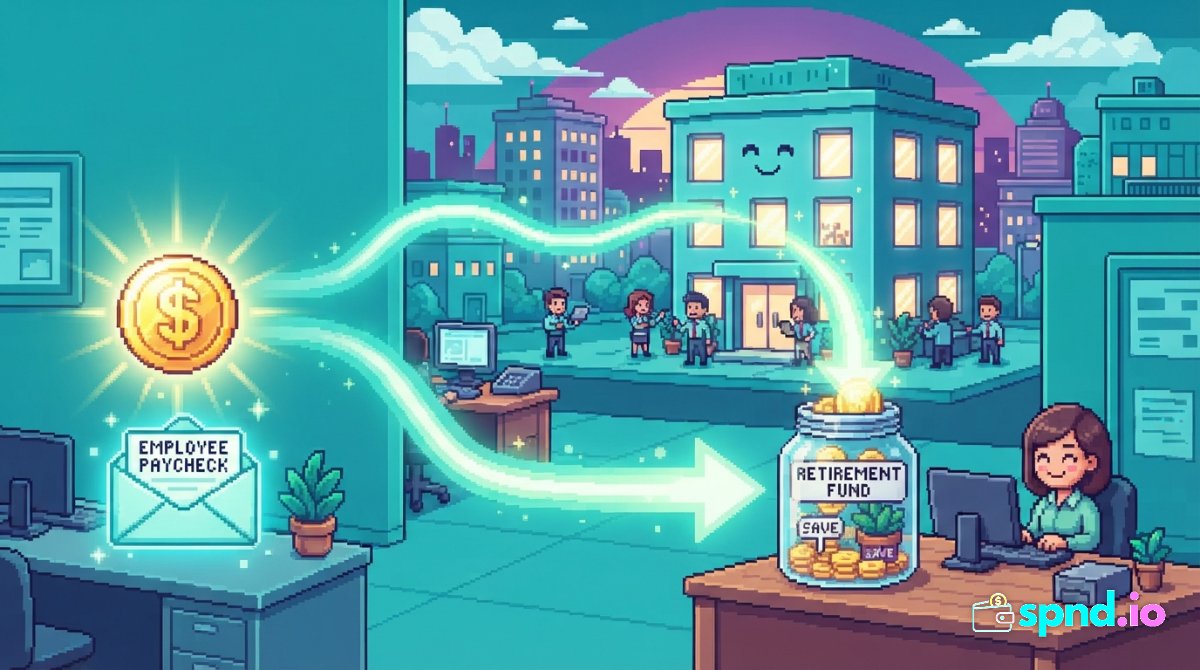
Of all the ways people leave money on the table, this is the most avoidable. An employer 401(k) match is, functionally, free money -- your employer contributing extra to your retirement account simply because you contributed some yourself. And a huge number of people don't contribute enough to claim the full match, usually because they never actually worked out what "enough" means for their specific plan.
How matching actually works
A common structure is something like "we'll match 50% of what you contribute, up to 6% of your salary" -- meaning if you put in 6% of your paycheque, your employer adds another 3%, for a combined 9% going into your account. Contribute less than that 6% threshold, and you're not just saving less -- you're actively declining part of the match you were offered. Every plan's formula is different, so the first thing to actually do is pull up your plan's specific match structure, not assume it matches someone else's.

Why this beats almost any other financial move
A 50% match is an instant 50% return on that portion of your contribution, before the money has even been invested in anything. No stock, no fund, nothing in a normal market environment reliably returns anywhere close to that in a single step. If you're deciding between paying down a moderate-interest debt faster or contributing enough to get your full match, the math usually favors capturing the match first -- it's a better guaranteed return than most debt interest rates you'd be saving on, with the exception of genuinely high-rate debt like credit cards.