Explore
Categories
More Categories
Money 101Learn the fundamentals of personal finance
DebtCredit card payoff & multi-debt strategy
Taxes & IncomeTake-home pay & self-employment tax
All Financial CalculatorsBrowse our complete suite of free money tools
Mortgage & HousingAffordability, buy vs rent, mortgage payments
Budgeting & CashflowBudget, cashflow & emergency fund planning
BlogPractical money tips and strategies
RetirementRetirement savings & RRSP/401(k) planning
Investing & Net WorthTrack your total financial picture
No-Fee BanksCompare fee-free bank accounts
InsuranceLife insurance coverage planning
Everyday ToolsCurrency exchange & daily habit cost
For ProfessionalsBuy pre-qualified leads in your area
Financial Planning

RRSP vs TFSA: Which Should You Max Out First?

J
Jonathon Hyjek
Last Updated: November 18, 2026 · 5 min read
RRSP vs TFSA: Which Should You Max Out First?
TL;DR

Both accounts shelter your investments from tax, but they do it at opposite ends of the timeline. Here's how to decide which one gets your money first.

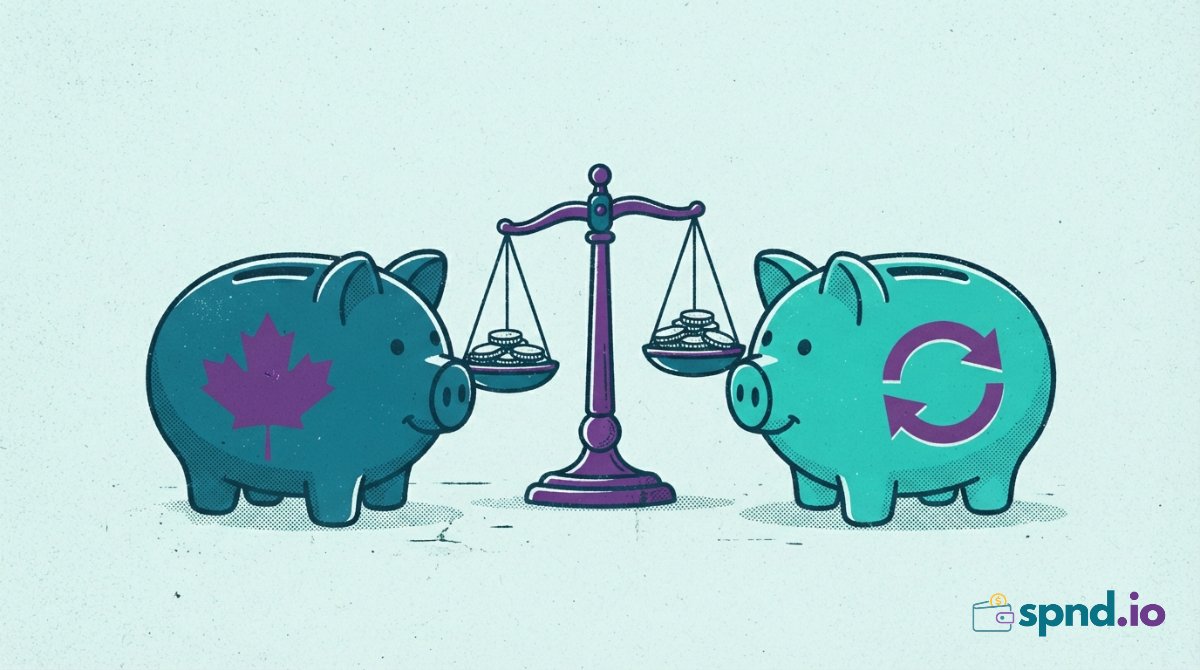
If you're saving in Canada, you've got two main tax-sheltered accounts fighting for your contribution dollars: the RRSP and the TFSA. They're often explained as basically interchangeable, which isn't quite right -- they shelter you from tax at opposite points in time, and that difference should actually drive which one you prioritize.

The core mechanical difference

An RRSP contribution reduces your taxable income this year -- you get a tax deduction now, your investments grow tax-deferred, and you pay income tax when you withdraw in retirement (ideally at a lower rate than you're taxed at today). A TFSA contribution gives you no deduction today, but everything inside it -- growth, withdrawals, all of it -- is completely tax-free forever. You're choosing between a tax break now or a tax break later; there's no version where you get both on the same dollar.
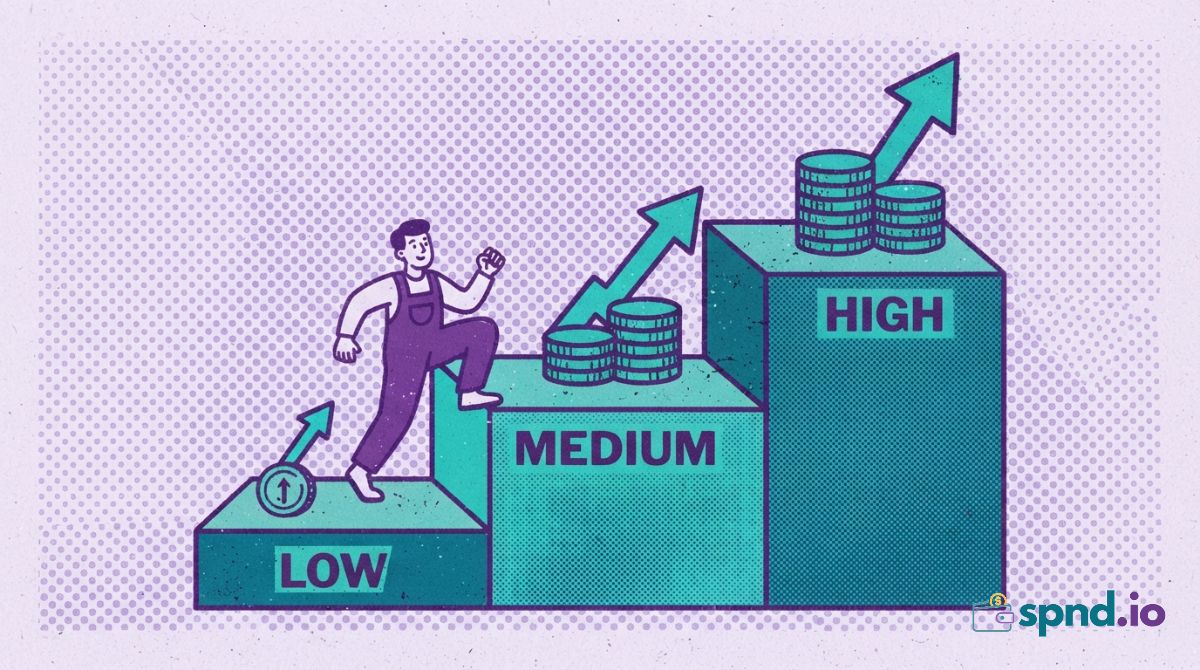
Illustrated climbing a three-step income ladder from low to high tax brackets with coin stacks

Why income level matters more than almost anything else

If you're in a high tax bracket right now and expect to be in a meaningfully lower one in retirement, the RRSP wins -- you're deferring tax from your expensive years to your cheap years, which is the entire point of the account. If you're early in your career, in a lower bracket, and expect your income (and tax rate) to climb over time, a TFSA often makes more sense, since you'd rather pay tax now at your current low rate than defer it to a future year when you might be taxed more. The RRSP deduction is worth more the higher your current marginal rate is -- it's genuinely not a one-size-fits-all answer.

Enjoying this? Get more like it.

Weekly tips and tools to build wealth, straight to your inbox. Free, no spam.

By subscribing, you agree to our terms and privacy policy.

Flexibility is the TFSA's other advantage

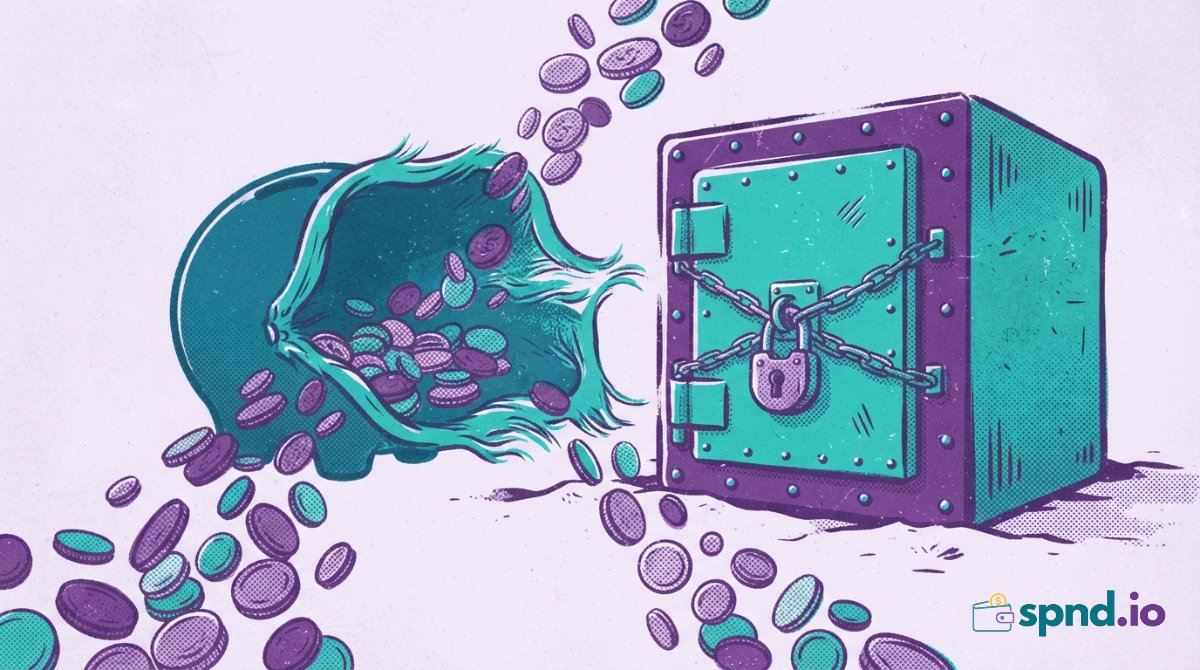
Withdraw from an RRSP outside of specific programs and you pay tax on it immediately and permanently lose that contribution room. Withdraw from a TFSA and there's no tax hit, and you get that contribution room back starting the following calendar year. If there's a real chance you'll need the money before retirement -- a home down payment, an emergency beyond what your emergency fund covers, a career break -- that flexibility matters.

Open piggy bank with coins flowing toward a padlocked retirement vault

The US equivalent, roughly

If you're reading this from the US, the closest parallel is a traditional vs Roth retirement account: traditional gives you the up-front deduction and taxes withdrawals later (like an RRSP), Roth taxes your contribution now and lets qualified withdrawals come out tax-free (like a TFSA). The same income-trajectory logic applies to choosing between them.

The honest answer for most people

If you can't max both, lean RRSP when your income (and tax rate) is at its highest, lean TFSA when it's lower or when you value flexibility more than the immediate deduction. And if your employer matches RRSP contributions, that match should come before almost anything else -- it's an immediate, guaranteed return no market can match. Run your own numbers through our RRSP/401(k) Calculator to see how different contribution splits actually grow over time.

Share this article: 𝕏 Twitter Facebook
J
Jonathon Hyjek
Founder & CEO, spnd.io

I've spent 20+ years in the trenches of personal finance — running businesses, surviving debt, and learning what it actually takes to build wealth. spnd.io is built from real-world experience, not textbooks.

Related Articles