
Explore
Categories
More Categories
Money 101Learn the fundamentals of personal finance
DebtCredit card payoff & multi-debt strategy
Taxes & IncomeTake-home pay & self-employment tax
All Financial CalculatorsBrowse our complete suite of free money tools
Mortgage & HousingAffordability, buy vs rent, mortgage payments
Budgeting & CashflowBudget, cashflow & emergency fund planning
BlogPractical money tips and strategies
RetirementRetirement savings & RRSP/401(k) planning
Investing & Net WorthTrack your total financial picture
No-Fee BanksCompare fee-free bank accounts
InsuranceLife insurance coverage planning
Everyday ToolsCurrency exchange & daily habit cost
For ProfessionalsBuy pre-qualified leads in your area
Budgeting

Budgeting for Couples: Merge Finances or Keep Them Separate?

J
Jonathon Hyjek
Last Updated: November 19, 2026 · 4 min read
Budgeting for Couples: Merge Finances or Keep Them Separate?
TL;DR

There's no universally right answer to merging finances as a couple. Here's how to think through the three common structures and pick the one that actually fits your relationship.

Ask five couples how they handle money and you'll get five different setups, and most of them will insist theirs is the right way. It isn't — there's no universally correct structure for combining finances, only ones that fit a specific couple's income situation, trust level, and personalities better or worse. What matters is picking one deliberately instead of drifting into whatever happened by accident in year one.

The three common structures

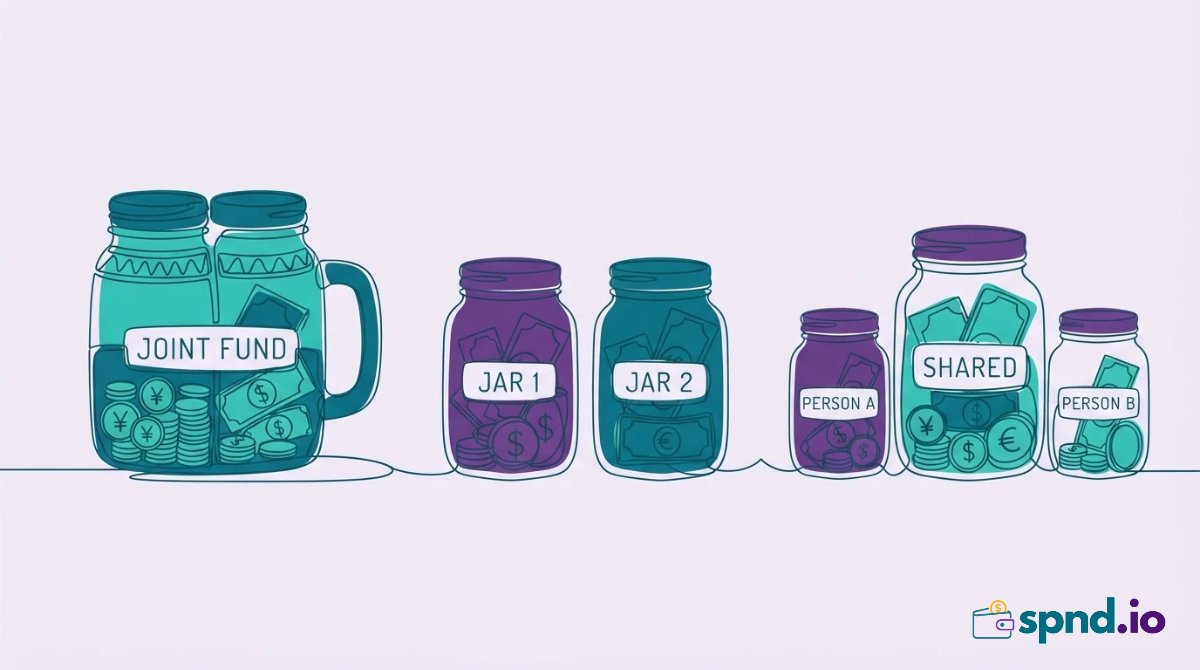
Fully merged

Everything goes into joint accounts — income, bills, savings, spending money. This is the simplest to manage day to day and works well when incomes are similar and both partners are comfortable with full financial transparency. It can get uncomfortable fast if incomes are very unequal, since one partner's individual spending becomes visible and sometimes judged by the other.

Fully separate

Each partner keeps their own accounts and splits shared costs by an agreed method — equally, or proportional to income. This preserves individual financial autonomy and avoids the awkwardness of justifying every personal purchase to a partner, but it requires constant, explicit coordination for anything shared, and can get genuinely complicated once a mortgage, kids, or long-term joint goals enter the picture.

The "yours, mine, ours" hybrid

A joint account covers shared expenses — rent, utilities, groceries, joint savings goals — funded by both partners (often proportional to income), while each person keeps a separate personal account for individual spending with no questions asked. This is the most common structure among couples who've been together a while, because it solves the two biggest problems of the other models: shared costs are handled jointly, and nobody has to justify their own coffee habit.

Enjoying this? Get more like it.

Weekly tips and tools to build wealth, straight to your inbox. Free, no spam.

By subscribing, you agree to our terms and privacy policy.

Line-art row of money jars showing three couple setups: a joint fund, separate jars, and personal jars with a shared jar

What actually determines the right fit

  • Income gap. A large income gap makes fully merged accounts feel uneven fast; proportional contributions to a shared account handle this better.
  • Spending transparency comfort. Some people are genuinely fine with full visibility into every transaction; others find it stressful regardless of how much they earn or spend.
  • How entangled your long-term goals already are. A mortgage, kids, or a shared business make fully separate finances increasingly impractical over time.

Whatever structure you land on, the actual numbers still need a home. Our Monthly Budget Planner works for a joint account, a hybrid shared account, or even tracking two separate budgets side by side if that's what your setup needs — the method is flexible, the honest conversation about which structure you're choosing is the part that actually takes work.

Two people in conversation with overlapping circles of shared values and goals and a balance scale between them

Share this article: 𝕏 Twitter Facebook
J
Jonathon Hyjek
Founder & CEO, spnd.io

I've spent 20+ years in the trenches of personal finance — running businesses, surviving debt, and learning what it actually takes to build wealth. spnd.io is built from real-world experience, not textbooks.

Related Articles