Financial Insights Blog

Financial insights, tips, and strategies to help you take control of your money

πŸ”
Mortgage Affordability: How Much House Can You Really Buy?
Budgeting

Mortgage Affordability: How Much House Can You Really Buy?

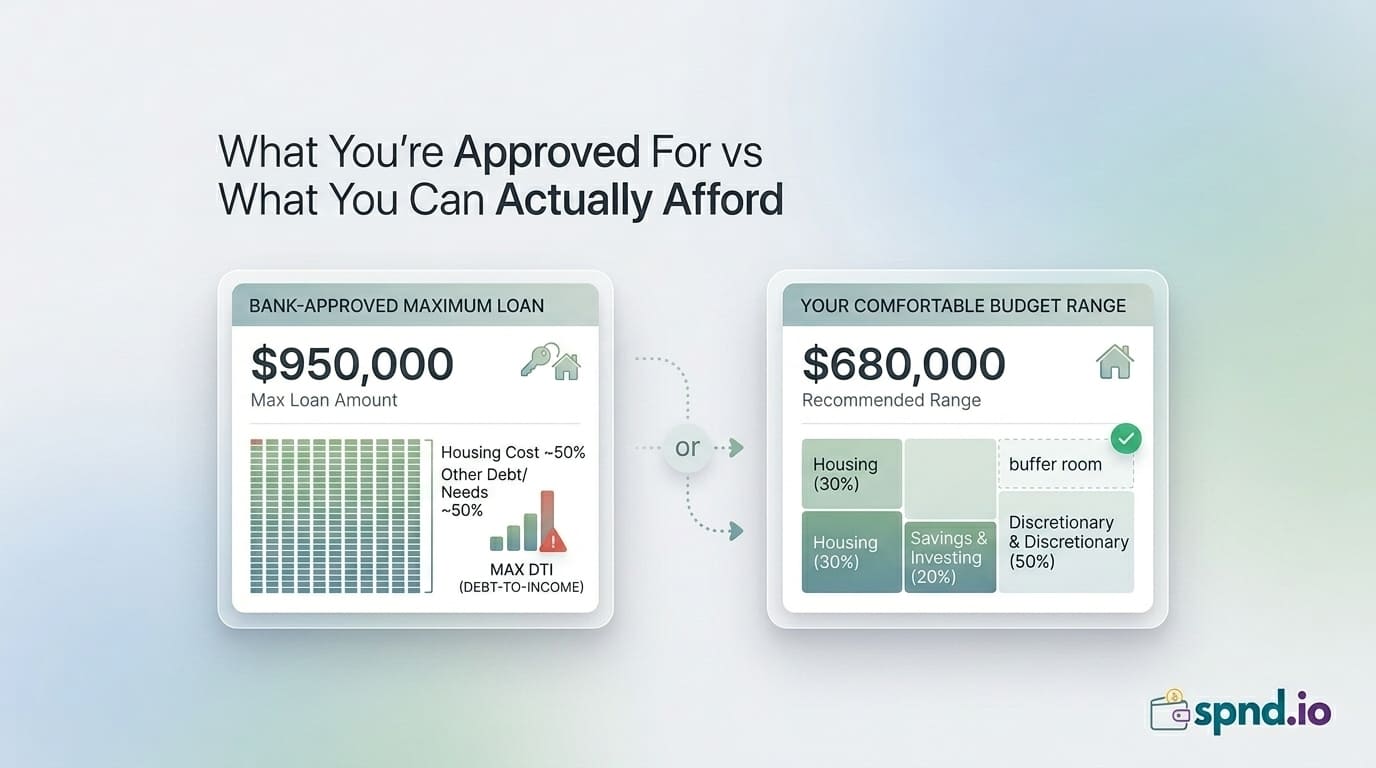
Lenders typically approve mortgages where housing costs stay under 28% of gross monthly income (front-end ratio) and total debt stays under 36-43% (back-end ratio). For real affordability, a stricter rule works better: keep total housing costs under 25% of take-home pay so you have room for savings, emergencies, and the rest of life.

πŸ“… May 12, 2026 Β· πŸ• 3 min read Β· πŸ‘€
Take-Home Pay by State and Province: What You Actually Keep
Budgeting

Take-Home Pay by State and Province: What You Actually Keep

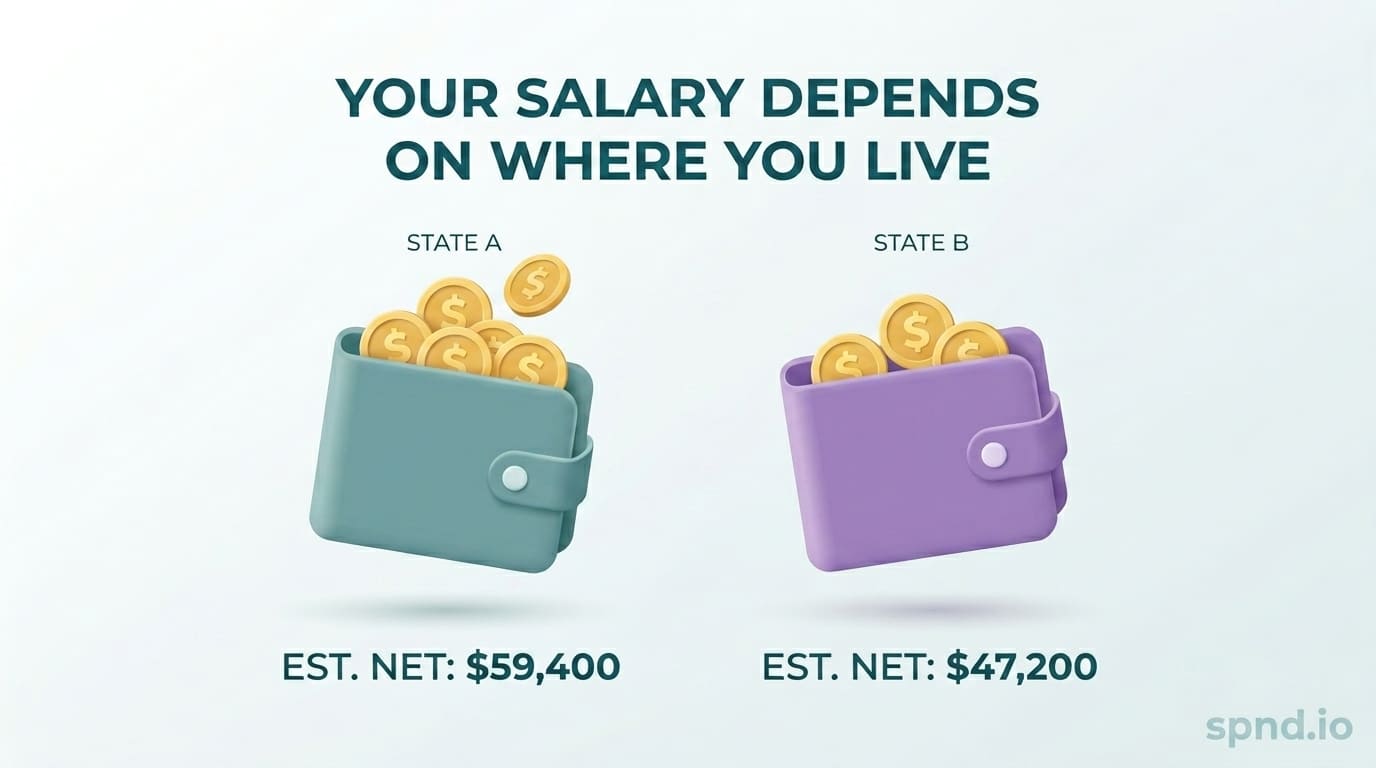
A $75,000 salary produces dramatically different take-home pay across locations: approximately $62,000 in Texas (83% kept), $57,000 in California (76%), $56,000 in Alberta (75%), and $52,000 in Quebec (69%). State or provincial income tax is the biggest driver of the variation.

πŸ“… May 12, 2026 Β· πŸ• 3 min read Β· πŸ‘€
How Much Should Be in Your Emergency Fund? (3, 6, or 12 Months?)
Budgeting

How Much Should Be in Your Emergency Fund? (3, 6, or 12 Months?)

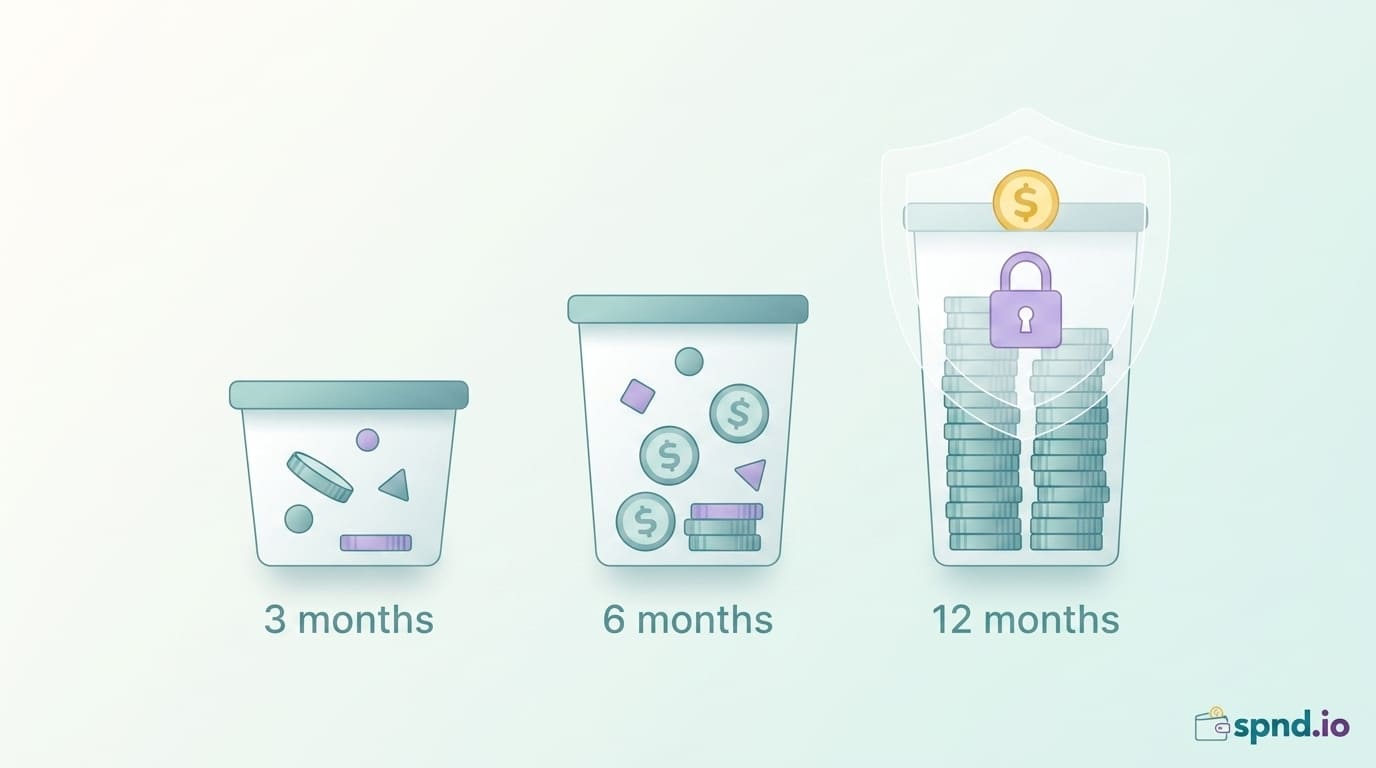
The right emergency fund size depends on your situation: 3 months of essential expenses for dual-income households with stable careers, 6 months for single-income or average-stability situations, and 9-12 months for self-employed, commission-based, or single-earner families with dependents. Calculate on essential expenses only, not total income.

πŸ“… May 12, 2026 Β· πŸ• 3 min read Β· πŸ‘€
50/30/20 vs 70/20/10 vs Zero-Based Budgeting: Which Is Right for You?
Budgeting

50/30/20 vs 70/20/10 vs Zero-Based Budgeting: Which Is Right for You?

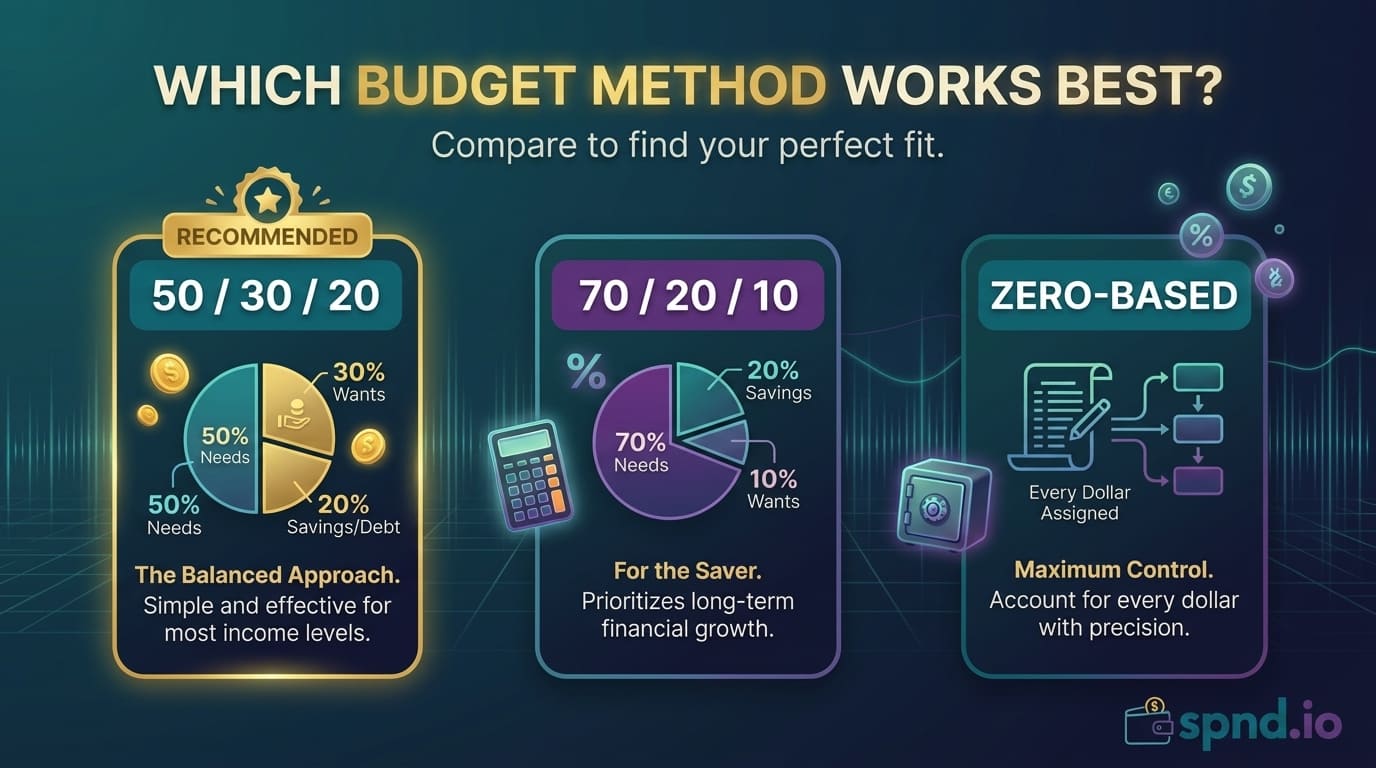
The 50/30/20 rule works best for beginners who want simple structure. Zero-based budgeting works best for detail-oriented people with variable expenses. The 70/20/10 rule works best for people in tight financial situations. Pay-yourself-first works best for automation-focused savers who hate tracking.

πŸ“… May 1, 2026 Β· πŸ• 3 min read Β· πŸ‘€
50/30/20 Budget Categories Explained: What Goes Where
Budgeting

50/30/20 Budget Categories Explained: What Goes Where

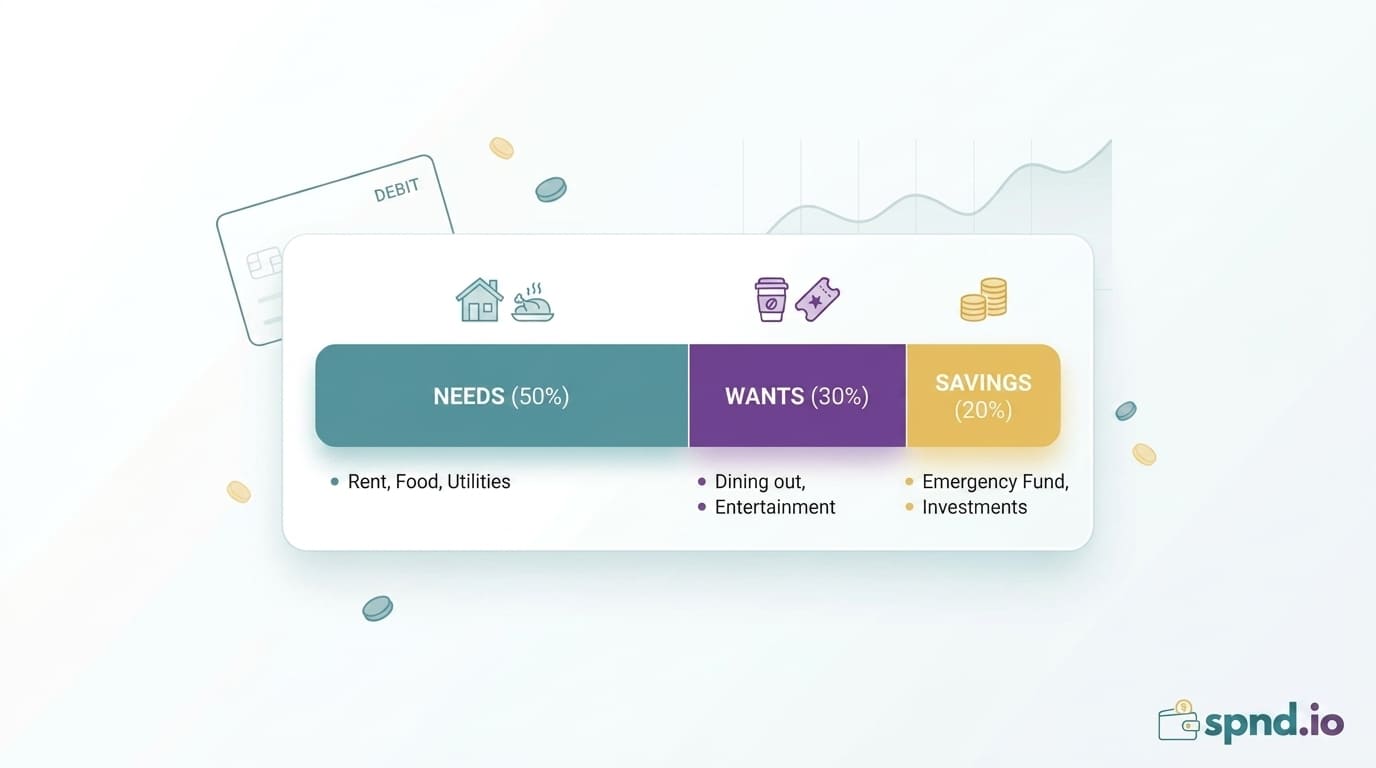
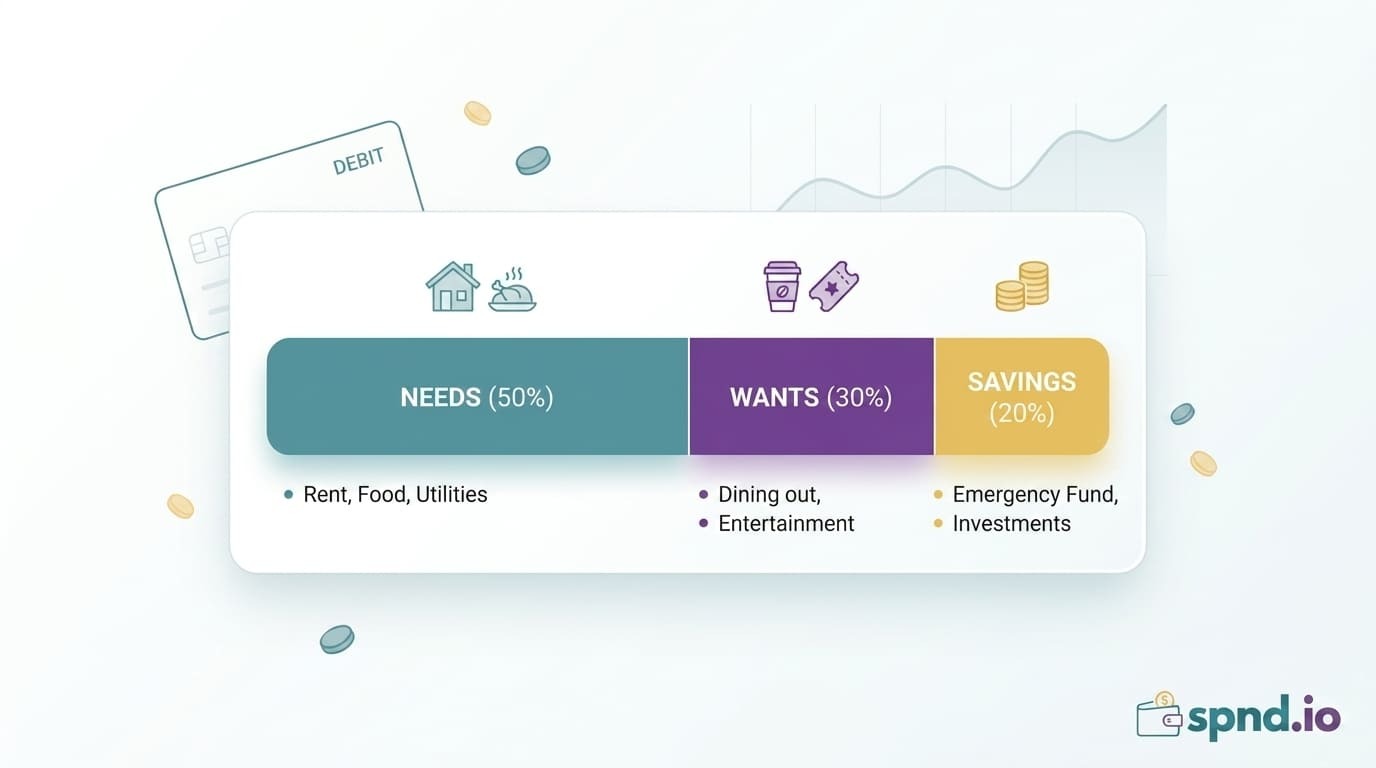
In the 50/30/20 budget rule, needs (50%) are non-negotiable expenses like rent, groceries, utilities, transportation, and minimum debt payments. Wants (30%) are lifestyle expenses like dining out, subscriptions, and hobbies. Savings (20%) includes retirement contributions, emergency fund deposits, and debt payments above the minimum.

πŸ“… May 1, 2026 Β· πŸ• 3 min read Β· πŸ‘€
50/30/20 Rule: Gross or Net Income? The Right Way to Calculate It
Budgeting

50/30/20 Rule: Gross or Net Income? The Right Way to Calculate It

The 50/30/20 budget rule uses net (after-tax) income, not gross. Your net income is your take-home pay after federal tax, state or provincial tax, Social Security or CPP, Medicare or EI, and any other mandatory deductions. Using gross income inflates every category by roughly 20-30% and leads to overspending.

πŸ“… May 1, 2026 Β· πŸ• 3 min read Β· πŸ‘€
The Complete Guide to the 50/30/20 Budget Rule
Budgeting

The Complete Guide to the 50/30/20 Budget Rule

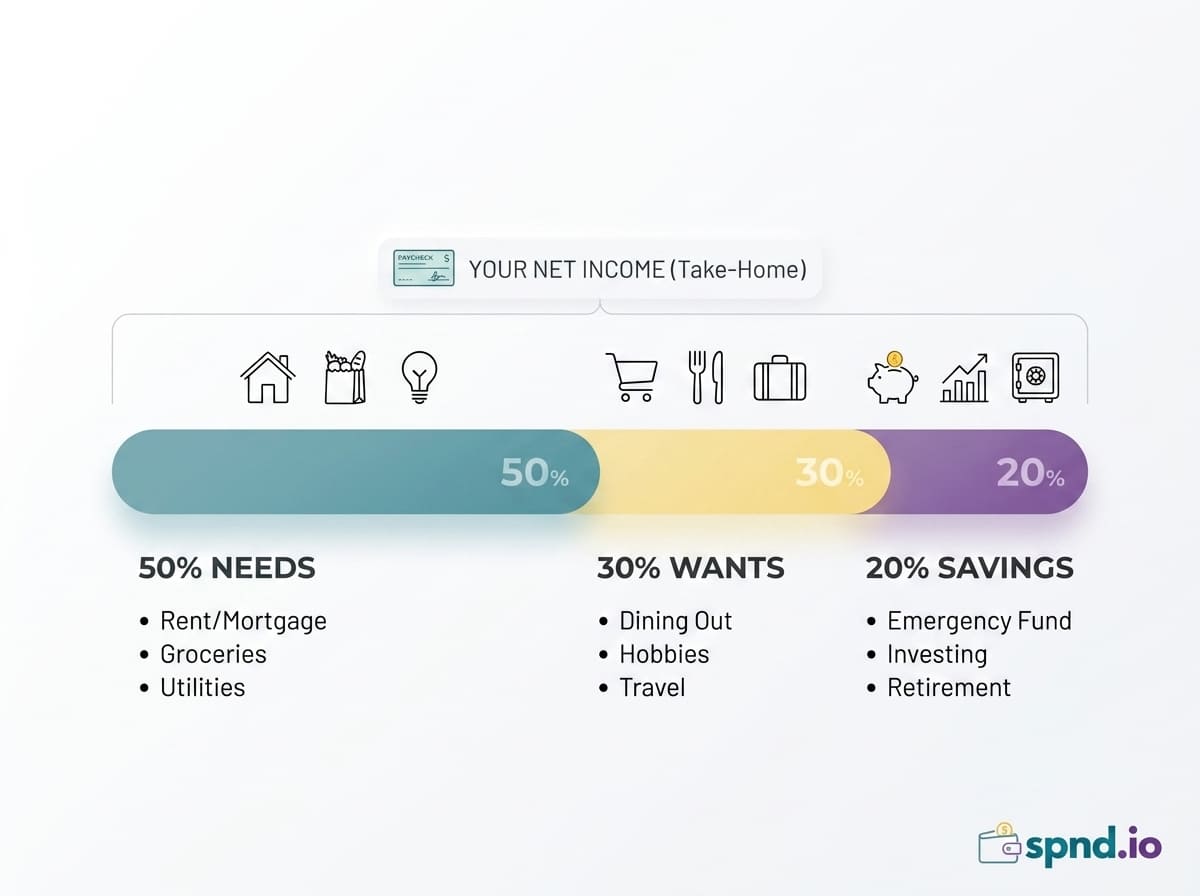
The 50/30/20 budget rule is a simple spending framework that divides your after-tax income into three categories: 50% for needs (housing, groceries, utilities, transportation), 30% for wants (dining out, entertainment, hobbies), and 20% for savings and debt repayment. Popularized by Senator Elizabeth Warren in 2005, it works because it is easy to remember and flexible enough to apply in most income ranges.

πŸ“… Apr 30, 2026 Β· πŸ• 3 min read Β· πŸ‘€
Understanding the 50/30/20 Budget Rule
Budgeting

Understanding the 50/30/20 Budget Rule

A practical guide to implementing the popular 50/30/20 budgeting method for better financial health.

πŸ“… Mar 2, 2025 Β· πŸ• 3 min read Β· πŸ‘€