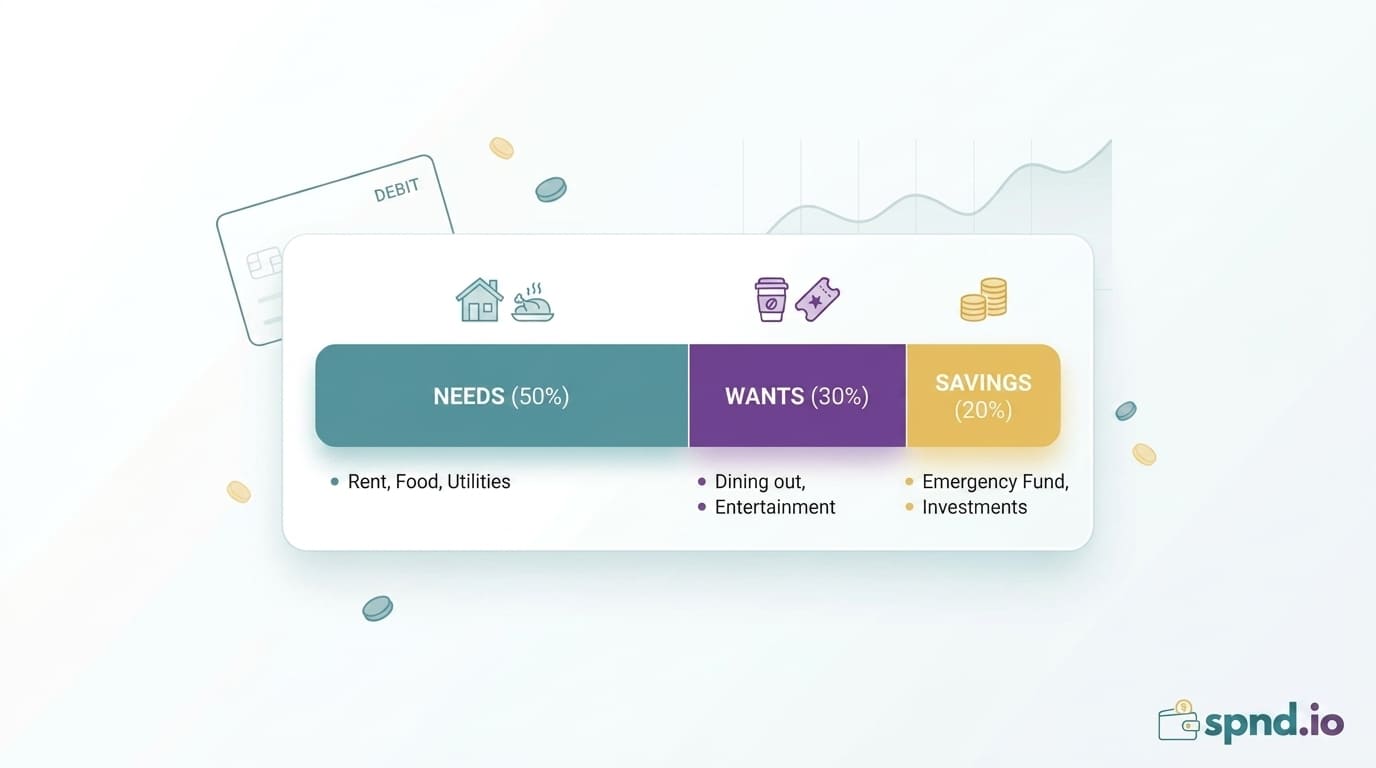
The 50/30/20 rule is simple math. What is not simple is deciding where each expense actually belongs. Is your car a need? What if it is a luxury model? Is your gym membership a want or a health need? What about the phone bill you need for work?
This guide goes category by category and gives you the actual rules. By the end you will have a cheat sheet you can use to categorize any expense in under ten seconds.
The Test: How to Decide in 10 Seconds
Before the lists, here is the core test that resolves almost every edge case.
Ask yourself: if I stopped paying this tomorrow, would something serious and unavoidable happen within 30 days?
-
Yes → Need (50%)
-
No, but I would miss it → Want (30%)
-
It grows my future wealth → Savings (20%)
Serious and unavoidable means things like: losing your home, losing your job, losing your car, damaging your credit, or endangering your health. Not 'I would be annoyed' or 'my life would be less fun.'
The 50% Needs Category: The Full List
Housing (Always a Need)
-
Rent or mortgage principal and interest
-
Property taxes
-
Homeowner's or renter's insurance
-
Essential repairs (furnace, roof, plumbing)
-
Condo or HOA fees if mandatory
Utilities (Always a Need)
-
Electricity
-
Water and sewer
-
Heating (gas, oil, or electric)
-
Basic internet — yes, this is now a need
-
Basic cell phone plan — yes, also a need
Food (Partial Need)
-
Groceries — needs
-
Takeout, restaurants, meal kits, food delivery — wants (see below)
Transportation (Always a Need, But Only the Basics)
-
Car payment on a reasonable vehicle
-
Car insurance (legally required)
-
Fuel for getting to work and essential errands
-
Essential maintenance (oil changes, tires, registration)
-
Public transit pass if you rely on it
Insurance (Always a Need)
-
Health insurance premiums
-
Life insurance if you have dependents
-
Disability insurance
-
Auto insurance (legally mandatory)
-
Renter's or homeowner's insurance
Debt (Minimum Payments Only)
-
Minimum credit card payments
-
Minimum student loan payments
-
Minimum auto loan payments
-
Minimum personal loan payments
Important: Only the minimum payments count as needs. Any amount you pay above the minimum is savings/debt repayment and belongs in the 20% bucket.
Health and Essentials
-
Prescription medications
-
Essential medical/dental/vision copays
-
Childcare if it enables you to work
-
Basic clothing for work and weather
-
Essential household supplies (toilet paper, cleaning products, laundry)
The 30% Wants Category: The Full List
Wants are everything you consistently choose to spend on that does not fit the 'serious consequence' test. This is the category with the least guilt and the most overspending.
Food and Drink
-
Restaurants and takeout
-
Coffee shop purchases
-
Alcohol
-
Meal kit subscriptions (HelloFresh, etc.) — convenience, not need
-
Bar tabs and happy hours
-
Premium or specialty groceries above what a basic shop requires
Entertainment and Subscriptions
-
Streaming services (Netflix, Disney+, Prime, Spotify, etc.)
-
Cable or satellite TV
-
Movie tickets, concerts, sporting events
-
Video games and in-game purchases
-
Books, audiobooks, magazines beyond library access
-
Podcast subscriptions
Lifestyle and Shopping
-
Clothing beyond basics
-
Shoes beyond what you actually need
-
Makeup, perfume, non-essential grooming
-
Salon and barber visits above basic grooming
-
Home décor, plants, non-essential household items
-
Electronics upgrades (new phone when the old one works)
Health and Fitness
-
Gym memberships and fitness classes
-
Supplements and vitamins (unless prescribed)
-
Wellness apps, meditation subscriptions
-
Therapy/coaching (unless medically required and insured)
Nuance: If a gym membership is actually keeping you out of the hospital, that is a judgment call. For most people, it is a want. The rule does not say wants are bad — just that they are wants.
Travel and Experiences
-
All vacations, weekend trips, and travel
-
Hotel stays, Airbnbs
-
Flights and rental cars for leisure
-
Theme parks, tours, excursions
Gifts and Personal
-
Gifts for family and friends (birthdays, holidays)
-
Charitable donations that are optional (not religious tithing if that is a fixed commitment)
-
Hobby supplies, craft materials, collections
-
Pet expenses beyond basic food and vet care
Upgrades
-
The difference between a basic car payment and a luxury one
-
The difference between basic internet and premium high-speed
-
Premium cable or TV packages
-
The difference between a standard phone plan and an unlimited premium one
The 20% Savings and Debt Category: The Full List
Savings
-
Emergency fund contributions
-
Retirement contributions (401(k), 403(b), IRA, RRSP, TFSA)
-
Taxable brokerage / investment account deposits
-
HSA contributions (US)
-
RESP contributions for kids' education (Canada)
-
529 plan contributions (US)
-
Down payment fund for a home
Debt Repayment Above the Minimum
-
Extra payments on credit cards
-
Extra payments on student loans
-
Extra payments on auto loans
-
Mortgage prepayments (principal only)
The Gray Areas: Judgment Calls
Your Car Payment
A reliable Honda Civic is a need if you use it to get to work. A brand-new luxury SUV is a need for the basic-transportation portion of the payment, and the rest is a want. A reasonable rule: if you are spending more than 10% of your take-home pay on a car, the excess is a want.
Home Internet and Cell Phone
Basic service counts as a need in 2026 — you cannot function professionally without either. Premium plans, top-tier data, multiple lines for family are mostly wants. Split the bill if needed: the basic level is needs, the premium portion is wants.
Groceries vs Premium Groceries
All groceries you cook at home are a need. The line only gets drawn if you consistently spend 50% more on premium brands, organic-everything, or specialty items when the basic version would do. For most people, no need to split — the whole grocery bill sits in needs.
Childcare
Childcare that enables you to work is a need. Extracurriculars and summer camps beyond basic care are wants.
Religious or Cultural Obligations
If you consistently tithe or give to your religious community and consider it a fixed personal obligation, it is reasonable to put it in needs. If it is occasional or voluntary, it is a want or a charitable giving line in savings.
The One Rule Everyone Breaks
Most people classify 90% of their expenses correctly. The failure happens in one specific place: subscription creep.
Netflix is $17. Spotify is $12. Prime is $15. Your meal kit is $80. Your fitness app is $15. Your news app is $10. Your cloud storage is $10. Individually each feels tiny. Together that is $159 per month, or about 3% of a $5,000 net income. That is 10% of your entire wants budget gone to things most people cannot remember signing up for.
Do a subscription audit every six months. Cancel anything you have not used in the last 30 days. Almost always, this alone unlocks enough room for the 20% savings target.
Print This Cheat Sheet
Keep this near your computer or saved on your phone for the next month:
-
NEED: You lose this, something serious breaks within 30 days. Rent, food, utilities, minimums, insurance, basic transport, basic phone/internet.
-
WANT: You choose it, and missing it only dents your enjoyment. Subscriptions, dining out, travel, upgrades, entertainment, gifts, shopping, hobbies.
-
SAVINGS: It grows future wealth or shrinks future debt. Retirement, emergency fund, investment deposits, above-minimum debt payments.
Once you have your expenses categorized, the Budget Planner at spnd.io lets you plug them into the 50/30/20 framework and see your split in real time. Free, no signup, works for any income level in the US or Canada.