There is a type of personal finance article where the author acts shocked that coffee costs money. This is not that article. These are the actual habits that cost Americans and Canadians the most per year, ranked by how much they quietly drain from typical budgets.
Some of these are obvious. Some will surprise you — the quiet ones often cost more than the loud ones. Each rank includes the yearly cost, the 10-year cost, and what the same money would be worth invested instead.
How the Ranking Was Built
These rankings use typical 2026 US and Canadian prices, based on a 7-day-a-week baseline for daily habits and a weekly frequency for semi-regular ones. Investment comparisons assume a 7% annual return, which is the historical long-term average of the S&P 500 adjusted for inflation.
Numbers are conservative. The actual cost for heavy users of any of these is higher.
1. Smoking a Pack a Day
The biggest single habit on this list — and the one with the worst hidden costs beyond the purchase price.
-
Daily cost: US $10-15, Canada $14-18
-
Yearly cost: $3,600-$5,500
-
10-year cost in cash: $36,000-$55,000
-
Same money invested at 7%: $52,000-$80,000 over 10 years
-
30-year opportunity cost: $370,000-$550,000
Excludes the extra $2,000-$4,000 per year smokers pay in higher life and health insurance premiums, and the earlier retirement forced on many due to health. The true lifetime cost is closer to $700,000-$1 million.
2. Daily Takeout or Restaurant Lunch
The habit most people do not realize adds up the fastest, because lunch feels routine and necessary.
-
Typical lunch spend: $15-18 per workday
-
Yearly cost (250 workdays): $3,750-$4,500
-
Homemade lunch alternative: $3-5 per day, saving $10-13 daily
-
10-year savings from switching: $25,000-$32,500 in cash
-
Same money invested at 7%: $36,000-$47,000 over 10 years
Food delivery apps make this worse because of service fees, delivery fees, and tips — a $15 lunch often lands at $22-25. Americans alone spent over $80 billion on food delivery in 2024.
3. Ride-Share When Transit Is Available
In urban areas, this is often a bigger drain than any other habit — and one the user rarely tracks.
-
Typical commuter who takes 3-4 ride-shares per week: $25-50 per ride average
-
Yearly cost: $4,000-$10,000
-
Transit alternative: $100-150 per month, or $1,200-1,800 per year
-
Potential savings: $2,800-$8,000 per year
-
10-year invested: $40,000-$115,000
Ride-share is a convenience tax that scales with your income. Higher earners hit $10,000+ per year without noticing because each individual ride feels 'reasonable.'
4. Daily Premium Coffee
The famous latte factor — smaller than it is made out to be, but still substantial over decades.
-
Daily cost: $5-7 for a specialty drink
-
Yearly cost (7 days/week): $1,825-$2,555
-
10-year cash cost: $18,250-$25,550
-
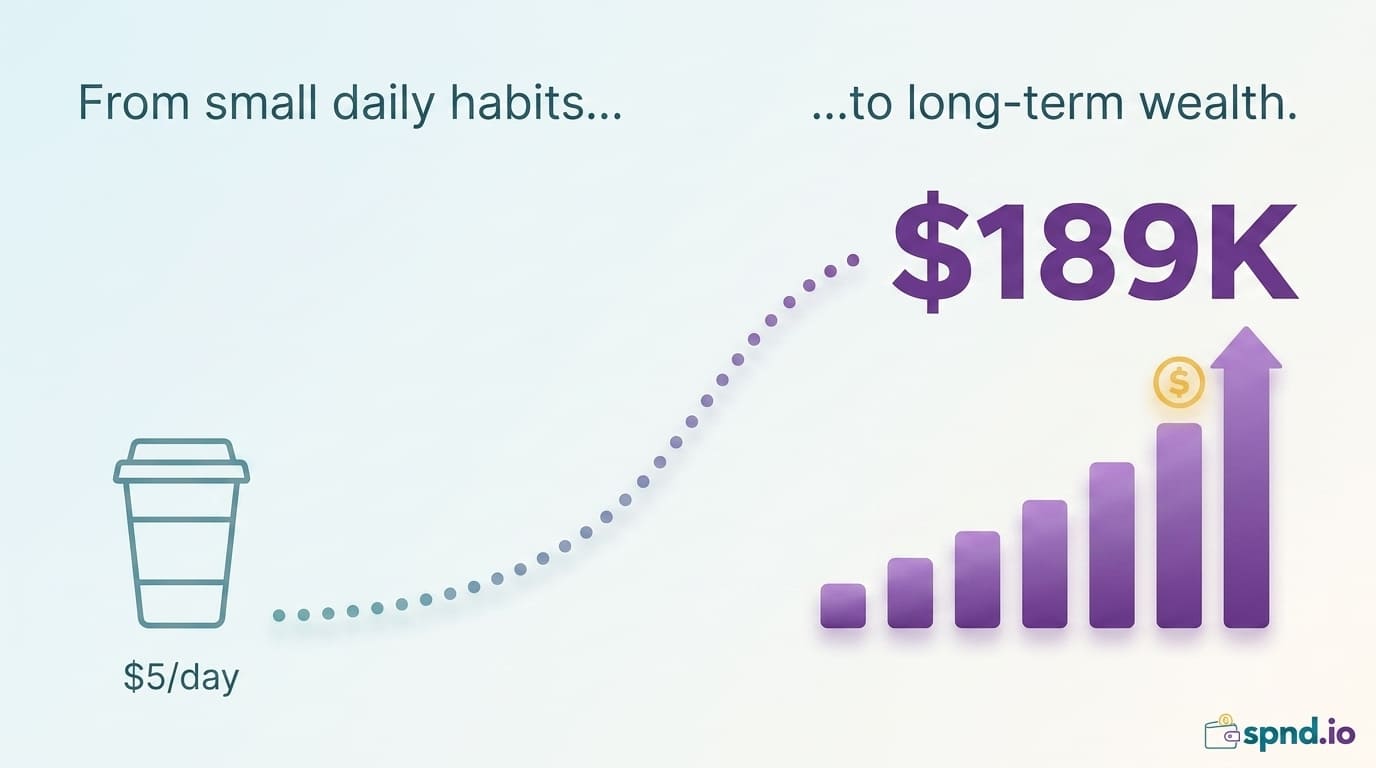
Home alternative saves ~$4 per day
-
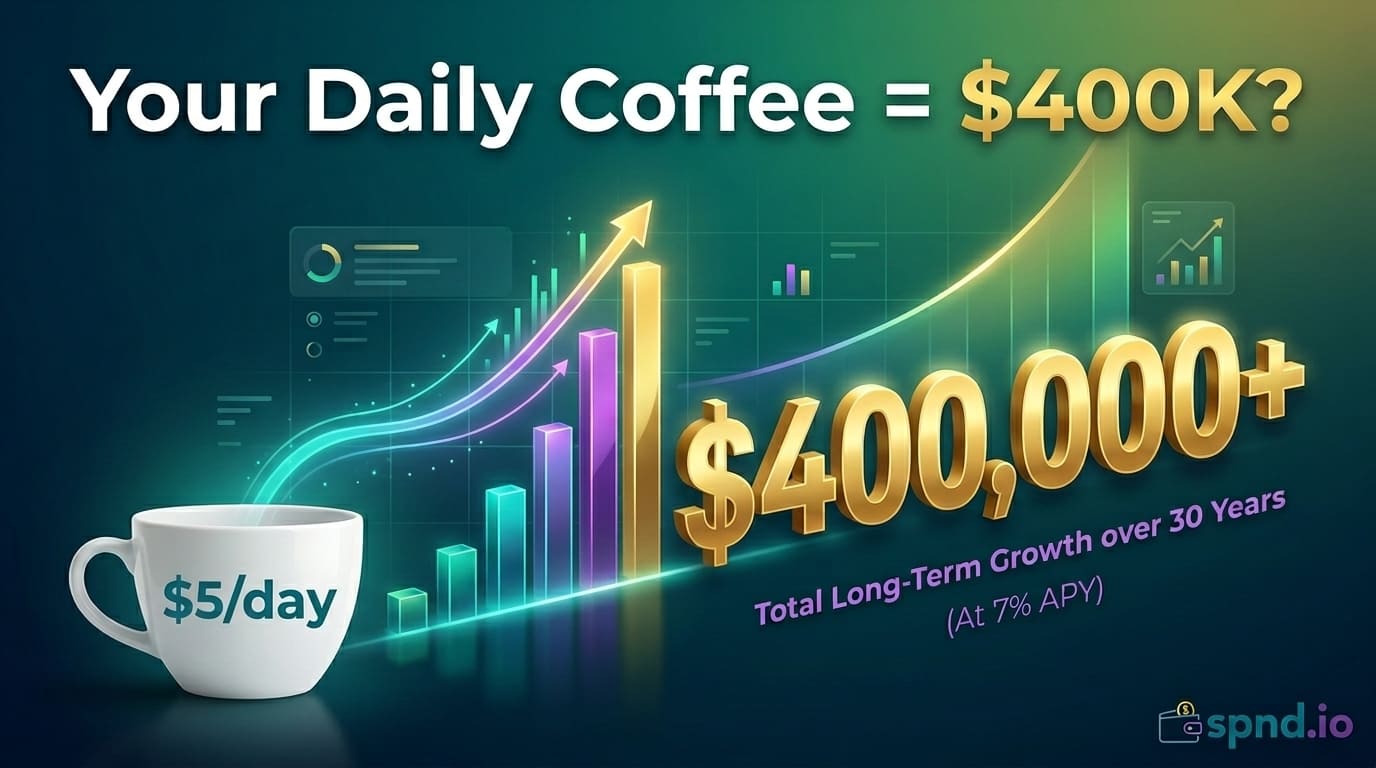
30-year invested opportunity cost: $189,000-$264,000
5. Alcohol Beyond Moderate Use
For moderate drinkers this is relatively small. For heavier drinkers, it can rival any habit on this list.
-
Moderate drinker (3-4 drinks/week at home): $500-$900/year
-
Regular social drinker (2-3 nights out/week): $3,000-$6,000/year
-
Heavy drinker (daily + social): $5,000-$12,000/year
Alcohol at restaurants and bars is typically 3-5x the retail price. A $40 bottle of wine at dinner for a couple twice a week is $4,000/year just in the restaurant markup over buying the same bottle at home.
6. Impulse Online Shopping
The quietest killer on this list. Most people have no idea what they spend because the charges are spread across dozens of small purchases.
-
Average American household: $2,000-$3,500/year on unplanned online purchases
-
Heavy browsers: $4,000-$8,000/year
-
10-year cost (average): $20,000-$35,000
-
30-year invested: $215,000-$370,000
The combination of one-click checkout, saved payment methods, free returns, and mobile shopping has made the 'impulse gap' between considering a purchase and completing it under 10 seconds. That is by design — and it is expensive.
7. Forgotten Subscriptions
Per item this is small. In aggregate, for most households, it is bigger than the coffee habit.
-
Average household active subscriptions: 12
-
Subscriptions unused or barely used: 4-6
-
Monthly cost of forgotten subscriptions: $35-80
-
Yearly waste: $420-$960
-
30-year invested: $44,000-$101,000
Streaming services, software trials that converted, gym memberships nobody uses, cloud storage from an old phone, meal kits paused but still billing. Audit these twice a year.
8. Extended Warranties and Protection Plans
Consumer Reports and virtually every consumer watchdog recommends declining extended warranties on almost every product.
-
Typical markup vs actual repair cost: 40-70% pure profit for the retailer
-
Typical household spend: $200-$600/year across devices, appliances, and cars
-
Lifetime total for a typical buyer: $8,000-$20,000
Exceptions where they can make sense: very expensive laptops used for work, a very well-reviewed plan on a particular appliance brand with known reliability issues. For everything else, self-insure by putting the premium into savings instead.
9. Convenience Fees
The invisible tax across modern life — each one is small, they add up.
-
Food delivery fees and tips above a takeout: $200-$600/year
-
Ticketing and service fees: $100-$400/year
-
ATM fees outside your bank: $100-$300/year
-
Wire transfer fees, late fees, returned-check fees: $50-$300/year
-
Typical household total: $450-$1,600/year
10. Credit Card Interest
Not technically a daily habit, but it often results from one — and it is pure cost with nothing in return.
-
Average US household carrying credit card debt: $7,200 balance at ~22% APR
-
Yearly interest cost: $1,584
-
10-year cost if balance is maintained: $15,840
-
And that is before the purchases that caused the balance
Every dollar of credit card interest is a dollar you paid the bank for nothing. Paying off even $1,000 of credit card debt at 22% is the investment equivalent of a guaranteed 22% annual return — better than any legal investment available.
The Cumulative Picture
A typical American or Canadian household runs three to five of these habits simultaneously without realizing it. The combined annual cost for a moderate spender who runs, say, daily takeout + premium coffee + forgotten subscriptions + impulse shopping + convenience fees:
-
Yearly total: $8,500-$13,500
-
10-year cash cost: $85,000-$135,000
-
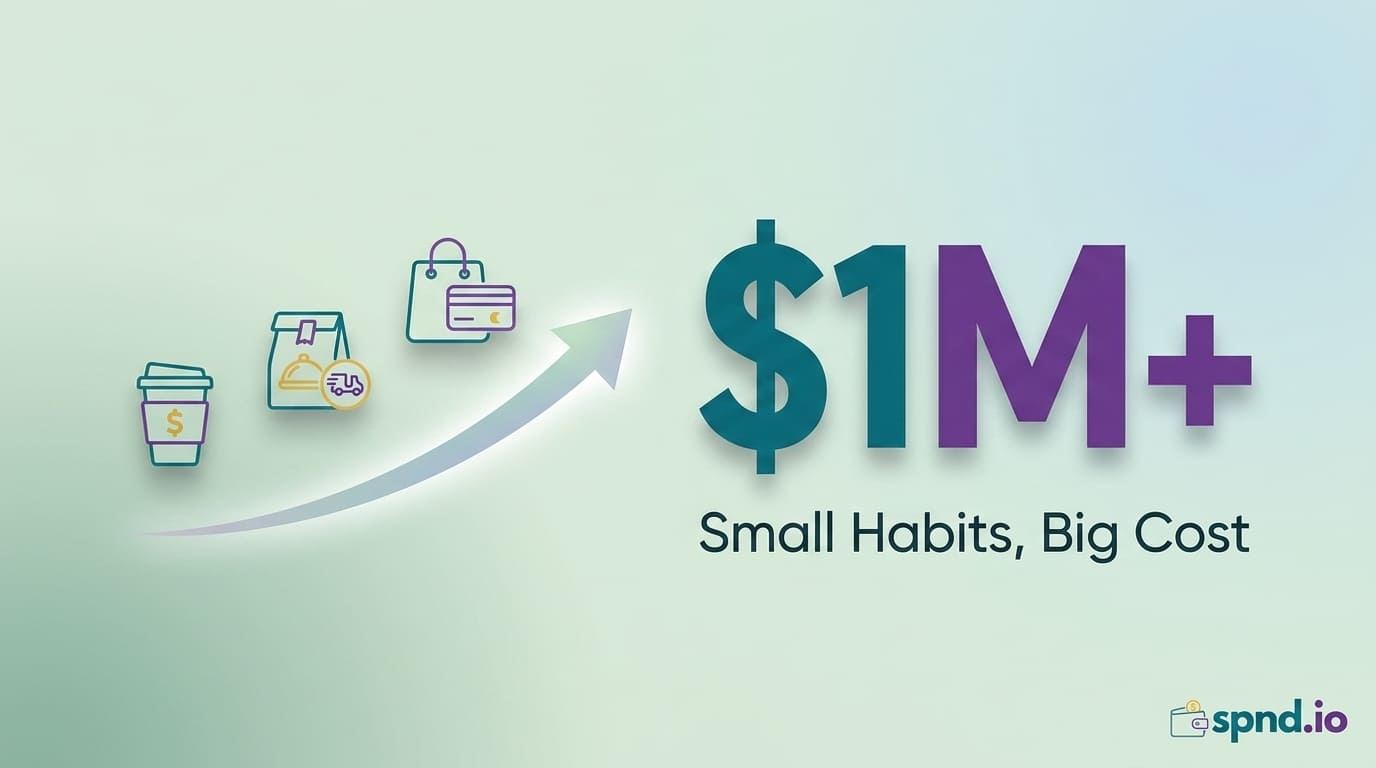
30-year invested opportunity cost: $800,000-$1.3 million
That is a paid-off house. That is early retirement. That is your kid's college fund, fully funded, multiple times over. And it disappeared one $6 DoorDash fee at a time.
What Actually Works
Reading a ranked list is not going to change your behavior. Here are the three moves that actually do.
-
Identify the top two habits from your own spending. Not from a ranking — from your own credit card and bank statements. Most people have two big ones and several small ones.
-
Set up automatic savings equal to what you expect to save. The moment you cut a $200/month habit, $200/month should automatically move to savings. Otherwise it gets reabsorbed into life within three months.
-
Track for 90 days. You do not need to track forever, just long enough to know your real baseline. Then you can stop tracking and trust the system.
The goal is not austerity. The goal is that your money buys you things you actually value, not things your autopilot keeps on buying because the purchase got easier.
Want to see exactly what any single habit is costing you? The free Daily Habit Calculator on spnd.io breaks out the 10-year, 20-year, and 30-year numbers for any daily expense — and compares them to the same money invested instead.