Explore
Categories
More Categories
Money 101Learn the fundamentals of personal finance
DebtCredit card payoff & multi-debt strategy
Taxes & IncomeTake-home pay & self-employment tax
All Financial CalculatorsBrowse our complete suite of free money tools
Mortgage & HousingAffordability, buy vs rent, mortgage payments
Budgeting & CashflowBudget, cashflow & emergency fund planning
BlogPractical money tips and strategies
RetirementRetirement savings & RRSP/401(k) planning
Investing & Net WorthTrack your total financial picture
No-Fee BanksCompare fee-free bank accounts
InsuranceLife insurance coverage planning
Everyday ToolsCurrency exchange & daily habit cost
For ProfessionalsBuy pre-qualified leads in your area
Budgeting

Zero-Based Budgeting: A Step-by-Step Beginner's Guide

J
Jonathon Hyjek
Last Updated: November 19, 2026 · 4 min read
Zero-Based Budgeting: A Step-by-Step Beginner's Guide
TL;DR

Zero-based budgeting means every dollar gets a job before the month starts. It sounds intense, but it's simpler than most budgeting methods once you've done it once.

Zero-based budgeting has a reputation for being intense, mostly because of the name. It sounds like something an accountant would do to a struggling business, not a method a regular person uses for their own paycheque. In practice, it's one of the more straightforward budgeting systems once you understand the one rule it's built on: income minus all assigned spending and saving should equal zero. Not because you're spending everything, but because every dollar — including the dollars going to savings — has a specific job before the month even starts.

The core idea

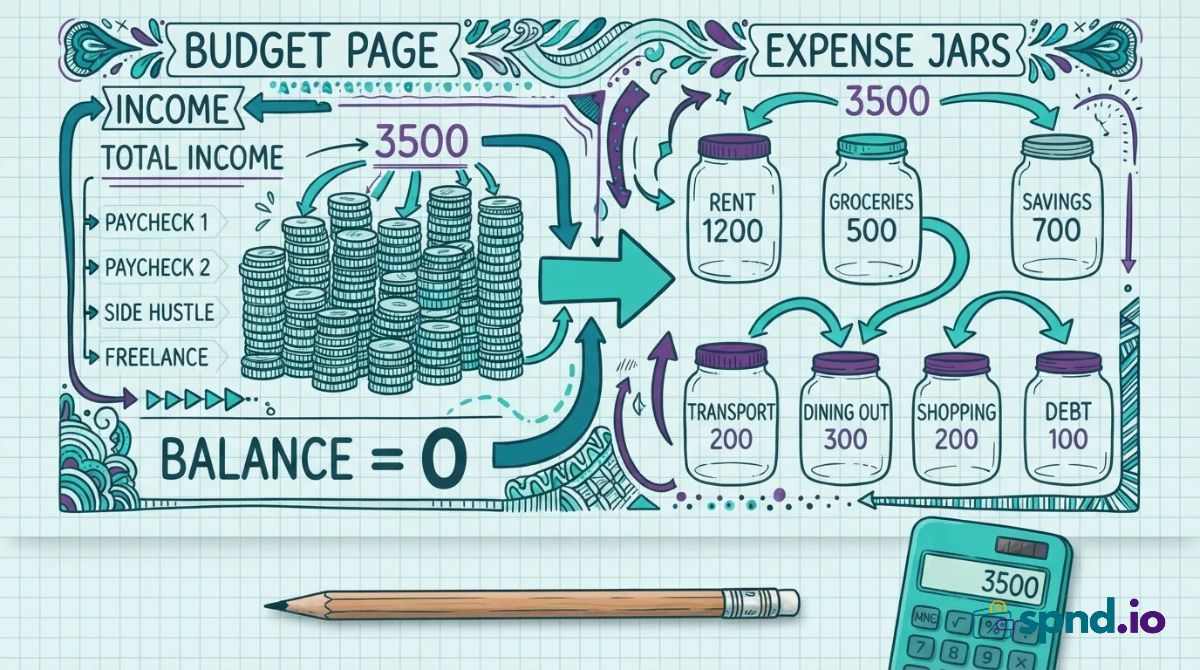
Most budgeting approaches start from your spending and try to control it. Zero-based budgeting starts from your income and tells every single dollar where to go before you spend anything. If you bring in $4,200 this month, you assign all $4,200 across categories: rent, groceries, debt payments, savings, fun money, everything — until there's nothing left unassigned. If you have money left over after assigning it all, it goes somewhere specific too: extra debt payment, extra savings, whatever you decide. Nothing floats.

How to actually build one

  • List your real income for the month. If it's irregular, use your lowest reasonably expected amount, not your average.
  • List every expense you know is coming, starting with fixed bills, then essentials like groceries and gas, then debt payments, then savings goals, then discretionary spending.
  • Assign dollars until you hit zero. If you run out of income before you run out of categories, something has to shrink — usually the discretionary categories first.
  • Track as you go, not just at month end. The whole method breaks down if you set it once and never check it against reality mid-month.

The hardest part for most beginners isn't the math, it's the first month, because you're forced to see exactly how much you've been spending without a plan. That's uncomfortable but it's also the entire point — the discomfort is where the useful information lives.
Enjoying this? Get more like it.

Weekly tips and tools to build wealth, straight to your inbox. Free, no spam.

By subscribing, you agree to our terms and privacy policy.

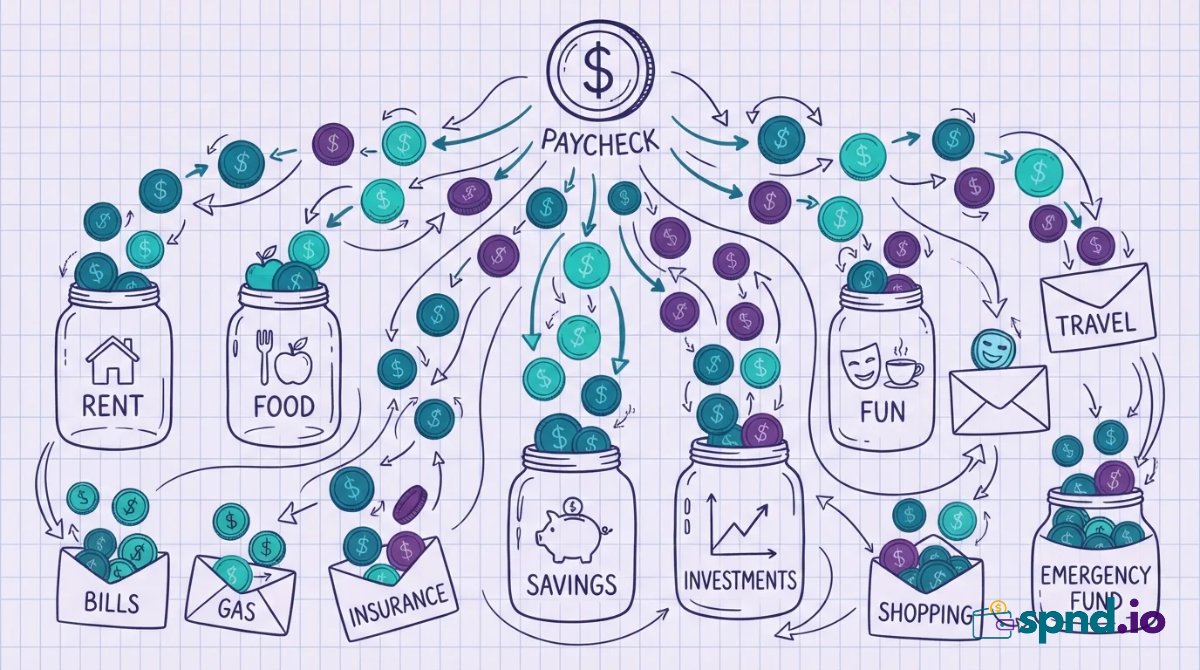
Hand-drawn illustration of one paycheck coin splitting into jars and envelopes for rent, food, savings and fun so every coin has a job

Where it tends to fall apart

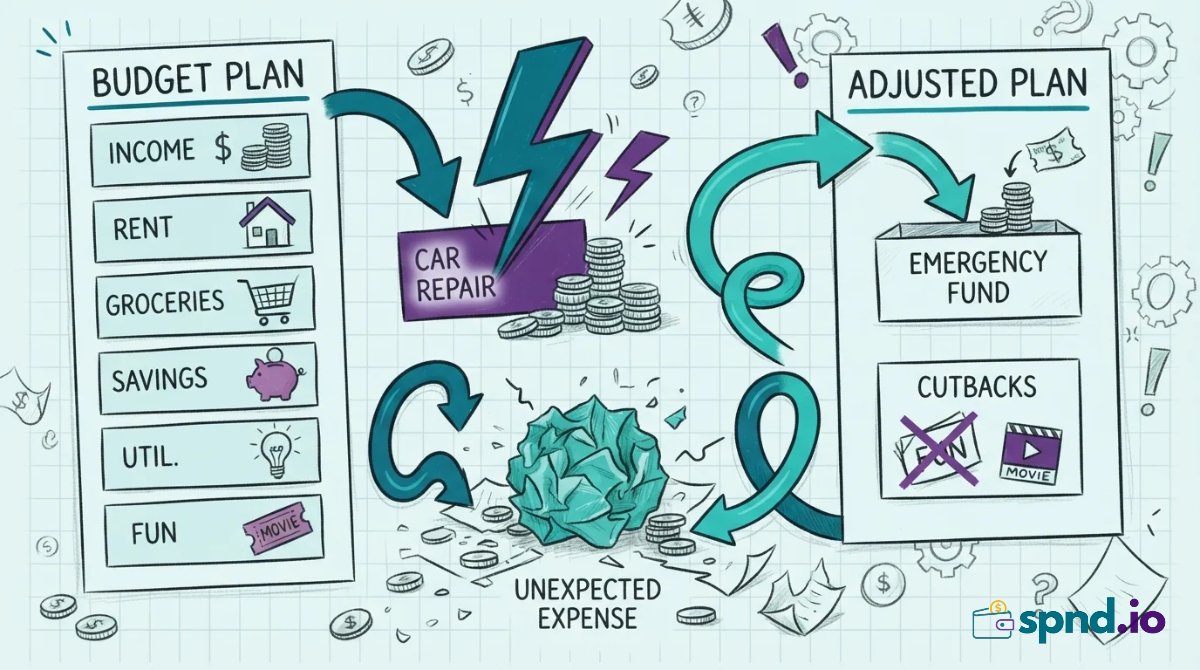
Zero-based budgeting struggles with irregular income and unexpected expenses, because the whole system assumes you know what's coming. The fix isn't to abandon the method, it's to build a buffer category specifically for the unexpected, and to build your essential categories around your minimum expected income rather than your best month.

If you want a tool built specifically for this kind of category-by-category assignment, our Monthly Budget Planner handles the zero-based structure for you — you just fill in categories and it shows you exactly what's left to assign. For a deeper foundation on budgeting principles generally, our Money 101 course covers how this fits alongside other approaches.

Tidy budget plan disrupted by a surprise lightning-bolt expense, with a flexible arrow showing the adjusted plan

Share this article: 𝕏 Twitter Facebook
J
Jonathon Hyjek
Founder & CEO, spnd.io

I've spent 20+ years in the trenches of personal finance — running businesses, surviving debt, and learning what it actually takes to build wealth. spnd.io is built from real-world experience, not textbooks.

Related Articles