Explore
Categories
More Categories
Money 101Learn the fundamentals of personal finance
DebtCredit card payoff & multi-debt strategy
Taxes & IncomeTake-home pay & self-employment tax
All Financial CalculatorsBrowse our complete suite of free money tools
Mortgage & HousingAffordability, buy vs rent, mortgage payments
Budgeting & CashflowBudget, cashflow & emergency fund planning
BlogPractical money tips and strategies
RetirementRetirement savings & RRSP/401(k) planning
Investing & Net WorthTrack your total financial picture
No-Fee BanksCompare fee-free bank accounts
InsuranceLife insurance coverage planning
Everyday ToolsCurrency exchange & daily habit cost
For ProfessionalsBuy pre-qualified leads in your area
Debt Management

Credit Utilization Explained: The 30% Rule and Why It's Not Quite Right

J
Jonathon Hyjek
Last Updated: November 14, 2026 · 3 min read
TL;DR

The 30% utilization rule isn't an official cutoff — it's a rough approximation. Here's what utilization actually measures and why it's the most fixable number on your credit report.

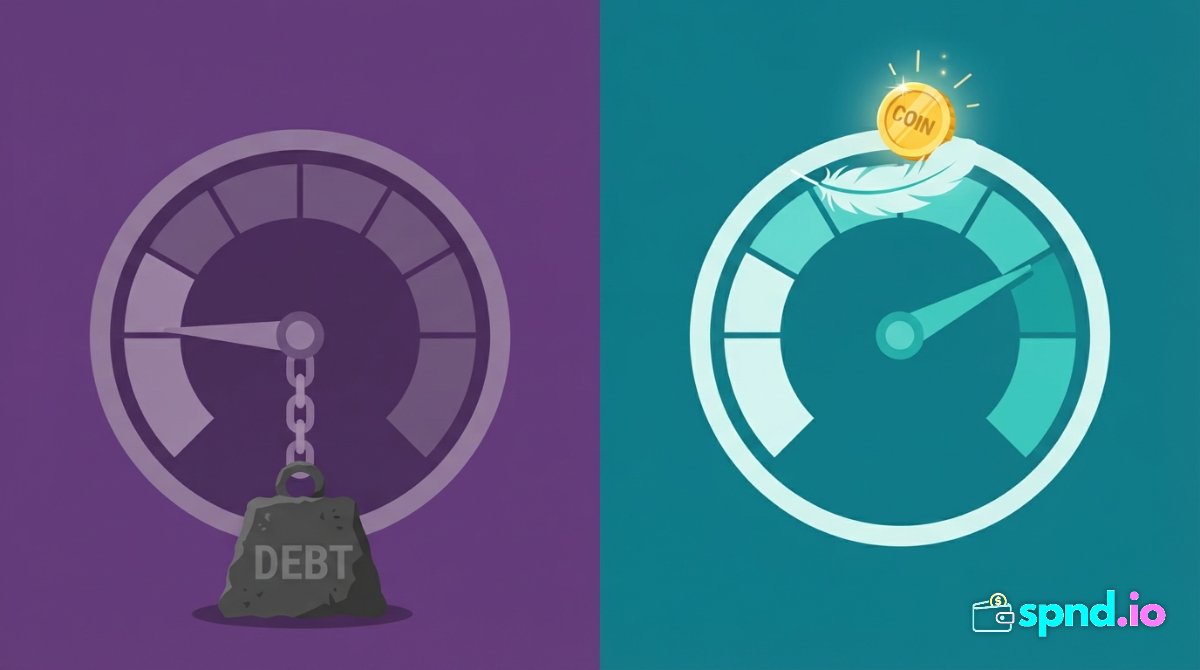
You've probably heard you should keep your credit utilization under 30%. It's repeated so often it sounds like an official rule, but it's really a rough approximation of how scoring models like FICO and VantageScore behave — and the real picture is both more nuanced and, in some ways, more forgiving than 'under 30% or else.'

What utilization actually measures

Credit utilization is your reported balance divided by your credit limit, calculated per card and also in total across all your revolving credit. Scoring models use it as a signal of how reliant you are on borrowed money relative to what you've been approved for — not because 29% is magically safe and 31% is dangerous, but because utilization bands correlate with risk in the data these models are built on. Lower utilization generally scores better across the board, with the biggest jumps typically happening at the low end: going from very high utilization down to moderate helps more than shaving a few more points off an already-low number.

The part most explanations leave out

Utilization is calculated from whatever balance your card issuer reports to the credit bureaus — usually your statement balance on a specific date, not your balance on the day you check your score. This means you can pay a card off in full every month and still show meaningful utilization if your statement closes while your balance is high, even temporarily. If this matters to you, like before a mortgage application, you can pay down your balance before the statement date instead of just before the due date.


Enjoying this? Get more like it.

Weekly tips and tools to build wealth, straight to your inbox. Free, no spam.

By subscribing, you agree to our terms and privacy policy.

Why it's the most fixable number on your report

Unlike payment history, which accumulates over years and can't be erased, utilization resets every reporting cycle based on your current balance. A missed payment from two years ago can still affect your score today; last month's high utilization has zero bearing once this month's lower balance gets reported. That makes it the single fastest lever available if you need to improve your score for a specific near-term reason.

If high utilization is less a reporting quirk and more a sign you're genuinely carrying balances you can't pay off monthly, that's a different problem worth solving directly, and understanding exactly how paying down balances affects your score can help — our Debt Payoff Calculator can show you a real timeline for bringing it down.

Share this article: 𝕏 Twitter Facebook
J
Jonathon Hyjek
Founder & CEO, spnd.io

I've spent 20+ years in the trenches of personal finance — running businesses, surviving debt, and learning what it actually takes to build wealth. spnd.io is built from real-world experience, not textbooks.

Related Articles