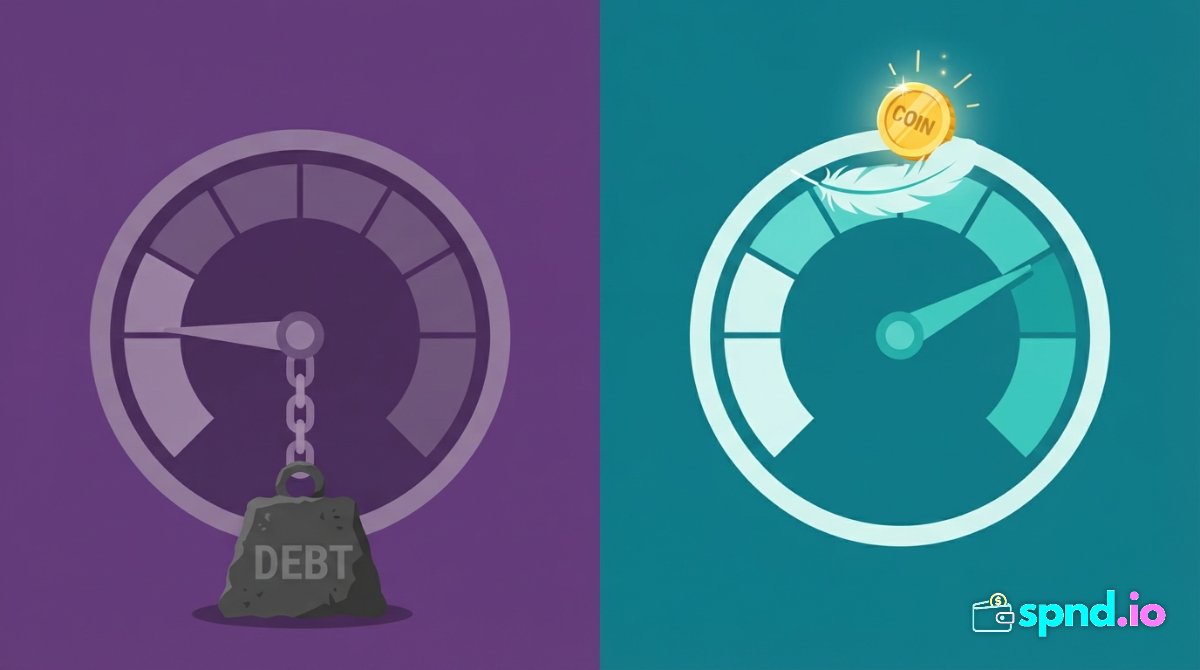
You've probably heard the line: "there's good debt and bad debt." It gets thrown around so often it's basically lost its meaning. A mortgage is good debt. A credit card is bad debt. Simple, right? Except it isn't, and treating it like a fixed rule is how people end up justifying debt they shouldn't be carrying.
Why the Label Matters More Than the Interest Rate
The common shortcut is to call low-interest debt "good" and high-interest debt "bad." That's a decent proxy, but it misses the actual mechanism. What really separates good debt from bad debt is whether the money borrowed built something that outlasts the debt itself, or whether it just evaporated the moment you spent it.
A student loan that led to a real increase in your earning power is good debt, even at a mediocre rate. A 0% financing deal on a couch you can't really afford is bad debt, even though the rate is technically zero, because in five years you'll have no couch value left and possibly still be making payments if you missed a condition in the fine print.
What Actually Makes Debt "Good"
- It builds an asset or earning capacity that survives the loan. A mortgage on a home you can actually afford, a loan for equipment that generates income, education that measurably increases what you can earn.
- The expected return beats the cost of borrowing. Not guaranteed, but reasonably likely based on real numbers, not hope.
- You can service it without straining your actual budget. Good debt on paper becomes bad debt in practice if the payment eats your ability to cover rent and groceries.
Where It Gets Messy
Mortgages are the classic "good debt," but a mortgage that's too large for your income, in a market where prices are inflated, isn't automatically good just because it's secured by real estate. Same with a car loan for a vehicle you need to get to work — necessary, sure, but the car's value drops the second you drive it off the lot, so it's really neutral debt at best, not an asset-building one.