Explore
Categories
More Categories
Money 101Learn the fundamentals of personal finance
DebtCredit card payoff & multi-debt strategy
Taxes & IncomeTake-home pay & self-employment tax
All Financial CalculatorsBrowse our complete suite of free money tools
Mortgage & HousingAffordability, buy vs rent, mortgage payments
Budgeting & CashflowBudget, cashflow & emergency fund planning
BlogPractical money tips and strategies
RetirementRetirement savings & RRSP/401(k) planning
Investing & Net WorthTrack your total financial picture
No-Fee BanksCompare fee-free bank accounts
InsuranceLife insurance coverage planning
Everyday ToolsCurrency exchange & daily habit cost
For ProfessionalsBuy pre-qualified leads in your area
Debt Management

How to Build a Debt Payoff Plan When You Have Multiple Loan Types

J
Jonathon Hyjek
Last Updated: November 18, 2026 · 5 min read
How to Build a Debt Payoff Plan When You Have Multiple Loan Types
TL;DR

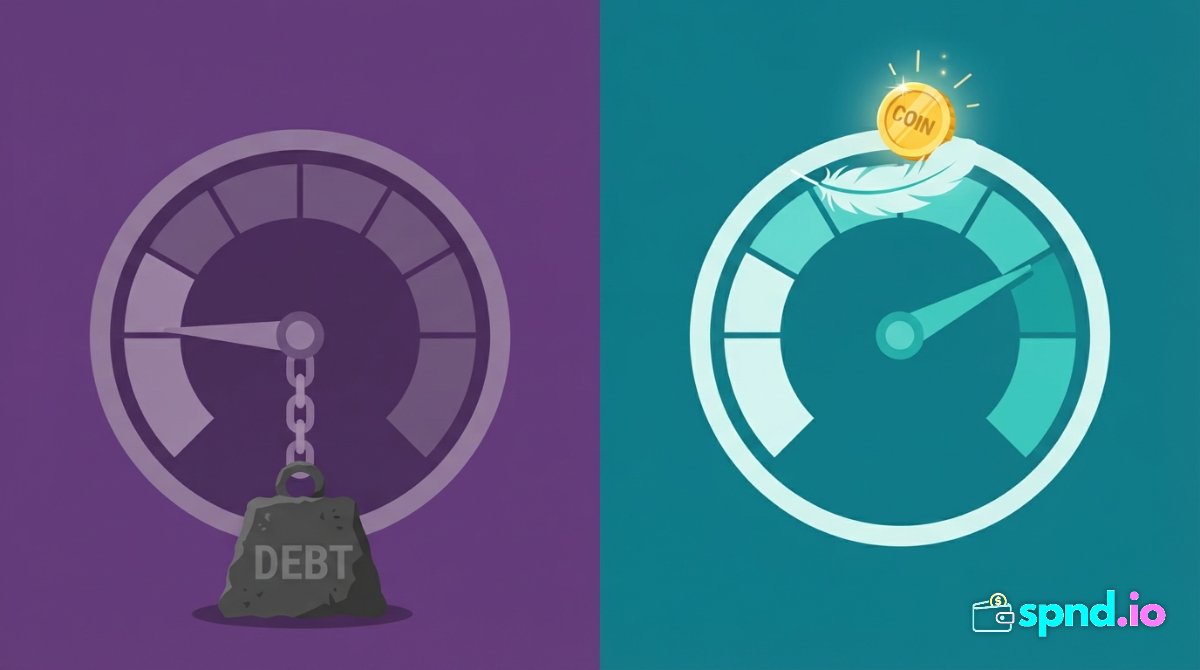
Credit cards, a car loan, student loans, maybe a personal loan too -- when debt comes in different shapes, a single payoff plan gets confusing fast. Here's how to build one anyway.

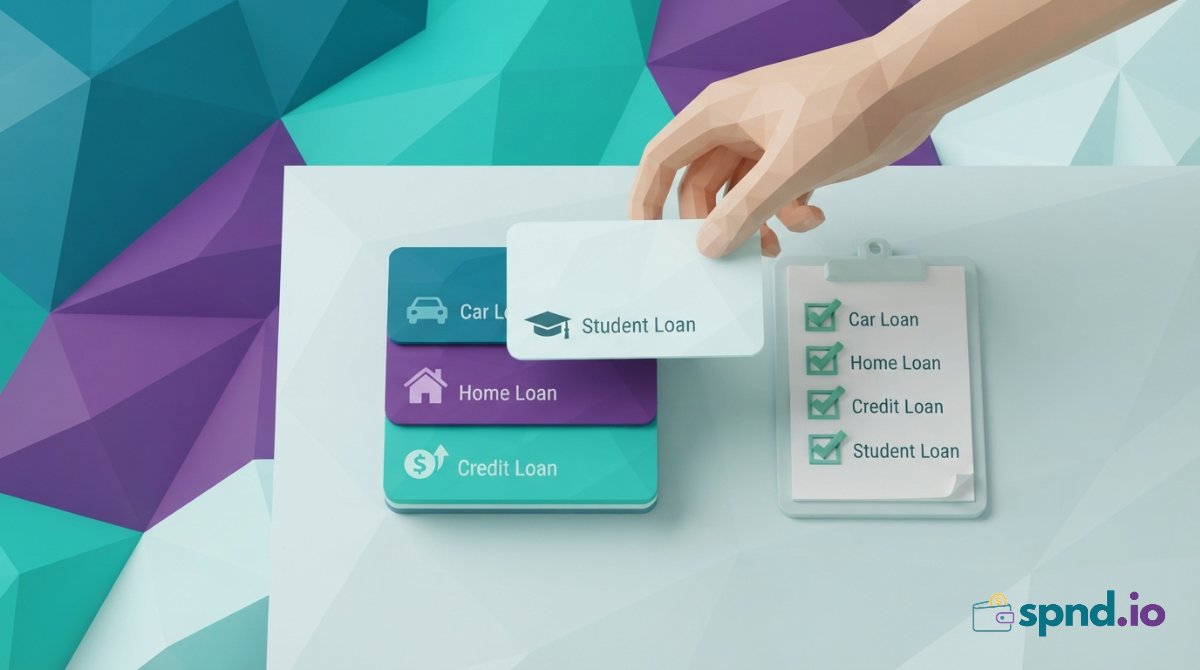
Most debt advice assumes you're dealing with one thing: one credit card, one loan. Real life is messier. You've got a credit card at a punishing rate, a car loan at a reasonable one, maybe student loans with their own repayment rules, and a personal loan sitting somewhere in between. Each has a different balance, rate, term, and minimum payment. Trying to think about all of it at once is exactly why people freeze up and just pay the minimums on everything.

The fix isn't a clever trick -- it's getting organized first, strategy second.

Step 1: Get every debt on one page

Literally. Balance, interest rate, minimum payment, and whether it's secured (car, mortgage) or unsecured (credit cards, most personal loans) for every single debt you carry. You cannot build a real plan from memory -- you'll underestimate how much the credit card is actually costing you and overestimate how bad the car loan is, because high-rate unsecured debt doesn't feel as urgent as a loan with a physical thing attached to it. It should feel more urgent. It's costing you more.

Illustrated wallet sorting coins into two lanes, one for flexible debts and one for fixed debts

Step 2: Separate what's flexible from what isn't

Secured debt (car, mortgage) usually has fixed payment schedules you can't easily accelerate without penalties, and missing payments risks losing the asset. Unsecured debt is where you have real room to maneuver -- you can throw extra money at it, and the consequences of a plan change are financial, not "someone repossesses your car" serious. Your extra payment capacity should go toward unsecured, high-rate debt first in almost every case.


Enjoying this? Get more like it.

Weekly tips and tools to build wealth, straight to your inbox. Free, no spam.

By subscribing, you agree to our terms and privacy policy.

Step 3: Pick one ordering rule and stick with it

Within your unsecured debts, decide: highest rate first (saves the most money, mathematically) or smallest balance first (clears a debt faster, which keeps you motivated). Both work. What doesn't work is switching strategies every few months because a different approach looked better that week -- the plan falling apart from inconsistency costs more than any theoretical savings from picking the "optimal" order.

Calendar with auto-pay arrow and magnifier above a staircase of shrinking debt blocks

Step 4: Automate the minimums, manually direct the extra

Set every minimum payment to autopay so nothing is ever late -- a missed payment's damage to your credit and your rates outweighs almost any optimization elsewhere. Then manually direct whatever extra you can afford toward your target debt each month, rather than spreading it thin across everything. A concentrated attack on one debt at a time clears balances faster than diluting your extra payment evenly.

Step 5: Revisit every few months, not every week

Your situation changes -- a raise, a rate change on a variable loan, a windfall. Check in on your plan quarterly and adjust. Checking in daily just creates anxiety without new information to act on.

If you want to see the actual math instead of eyeballing it, run your real numbers through our Debt Payoff Calculator -- it handles multiple debts at once and shows you exactly how many months and dollars separate the avalanche and snowball approaches for your specific situation, not a generic example.

Share this article: 𝕏 Twitter Facebook
J
Jonathon Hyjek
Founder & CEO, spnd.io

I've spent 20+ years in the trenches of personal finance — running businesses, surviving debt, and learning what it actually takes to build wealth. spnd.io is built from real-world experience, not textbooks.

Related Articles