Explore
Categories
More Categories
Money 101Learn the fundamentals of personal finance
DebtCredit card payoff & multi-debt strategy
Taxes & IncomeTake-home pay & self-employment tax
All Financial CalculatorsBrowse our complete suite of free money tools
Mortgage & HousingAffordability, buy vs rent, mortgage payments
Budgeting & CashflowBudget, cashflow & emergency fund planning
BlogPractical money tips and strategies
RetirementRetirement savings & RRSP/401(k) planning
Investing & Net WorthTrack your total financial picture
No-Fee BanksCompare fee-free bank accounts
InsuranceLife insurance coverage planning
Everyday ToolsCurrency exchange & daily habit cost
For ProfessionalsBuy pre-qualified leads in your area
Debt Management

The Hidden Cost of Minimum Payments: A Real Numbers Breakdown

J
Jonathon Hyjek
Last Updated: November 18, 2026 · 4 min read
The Hidden Cost of Minimum Payments: A Real Numbers Breakdown
TL;DR

Minimum payments are calculated to keep you paying as long as possible, not to get you out of debt. Here's exactly how that math works against you.

Credit card minimum payments are not designed to pay off your balance in a reasonable time. They're designed to be the smallest amount the issuer can require while still collecting as much interest as legally possible over as long as possible. Understanding the mechanism changes how urgently you treat "just paying the minimum."

How the minimum is actually calculated

Most issuers set the minimum as a small percentage of your balance (commonly in the 1-3% range) plus that month's interest charge, with a low dollar floor. Early on, when your balance is high, almost the entire minimum payment is interest — the amount actually reducing your principal is tiny. As the balance slowly drops, the minimum drops too, which is exactly why paying "the minimum" on a large balance can genuinely take over a decade, even though the number on your statement looks small and manageable every single month.
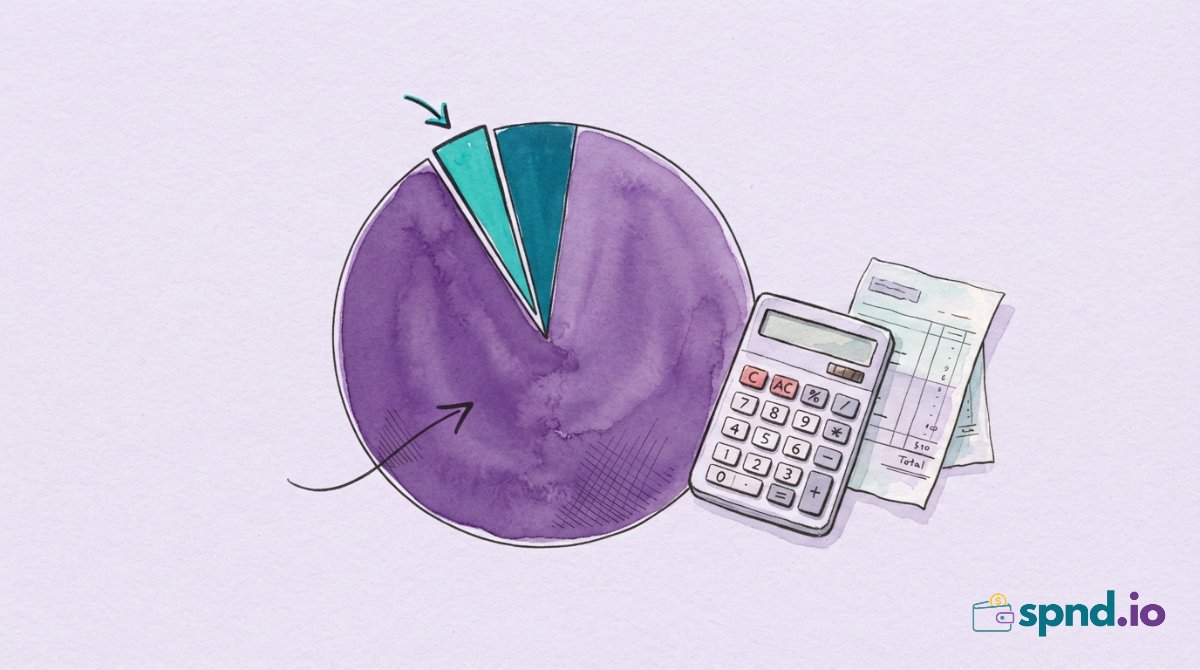
Watercolor pie chart with a tiny teal slice for the principal and a huge purple slice for interest, beside a calculator and a bill

What this looks like in practice

Picture a balance carried at a typical high-teens to low-twenties APR, paying only the minimum each month. The interest charged that month is often larger than the amount of principal the payment actually removes, especially in the first several years. You can be making every payment on time, in full, as required, and still watch the balance barely move. That's not a personal failure — it's the mechanism working exactly as designed.
Enjoying this? Get more like it.

Weekly tips and tools to build wealth, straight to your inbox. Free, no spam.

By subscribing, you agree to our terms and privacy policy.

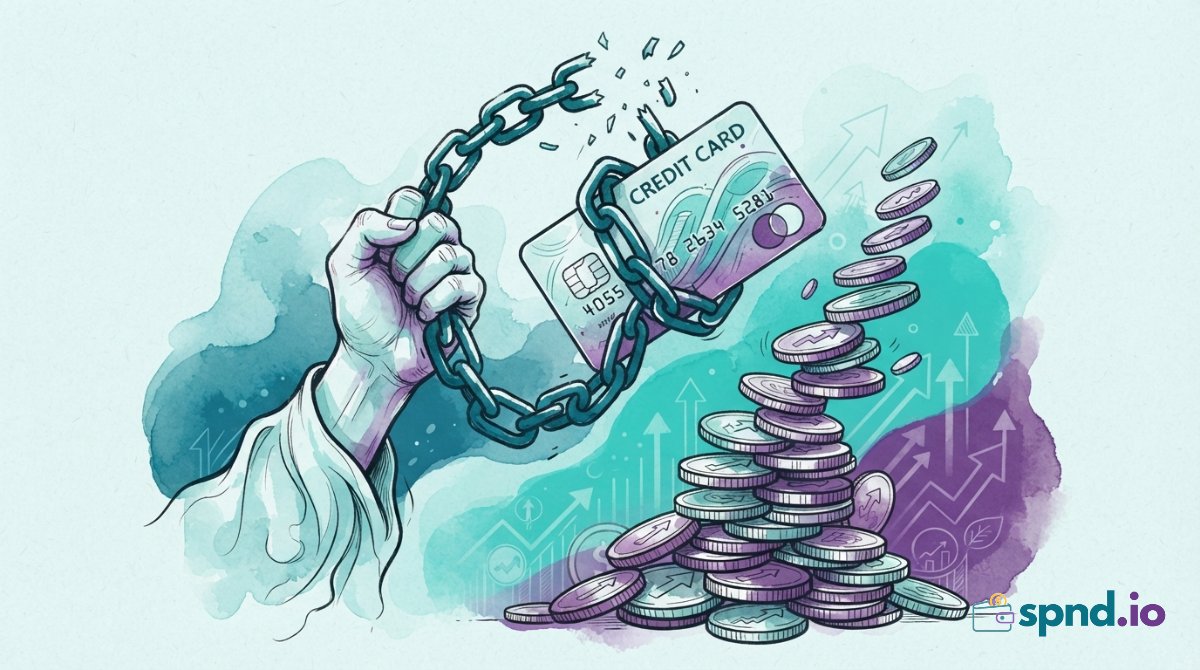
Watercolor illustration of a hand breaking a chain around a credit card with a growing stack of coins, breaking the minimum-payment cycle

What actually breaks the cycle

Any fixed extra amount on top of the minimum disproportionately speeds things up, because that money isn't eaten by interest first the way the minimum is — it goes straight at principal. Even a modest, consistent extra payment can cut years off the payoff timeline and save a meaningful amount in total interest. The exact numbers depend entirely on your balance and rate, which is why guessing isn't useful here — plug your real numbers into our Credit Card Debt Calculator and watch what a specific extra monthly amount actually does to your payoff date and total interest paid — or see how to get the rate itself lowered, which shrinks the interest portion of every future minimum payment too.

If you're carrying more than one card, the same principle applies across all of them, and the order you attack them in matters. Our Debt Payoff Calculator compares avalanche (highest rate first) against snowball (smallest balance first) side by side, so you can see the real dollar difference before picking a strategy rather than guessing which sounds better.

Share this article: 𝕏 Twitter Facebook
J
Jonathon Hyjek
Founder & CEO, spnd.io

I've spent 20+ years in the trenches of personal finance — running businesses, surviving debt, and learning what it actually takes to build wealth. spnd.io is built from real-world experience, not textbooks.

Related Articles