Financial Insights Blog

Financial insights, tips, and strategies to help you take control of your money

πŸ”
How Much Should Be in Your Emergency Fund? (3, 6, or 12 Months?)
Budgeting

How Much Should Be in Your Emergency Fund? (3, 6, or 12 Months?)

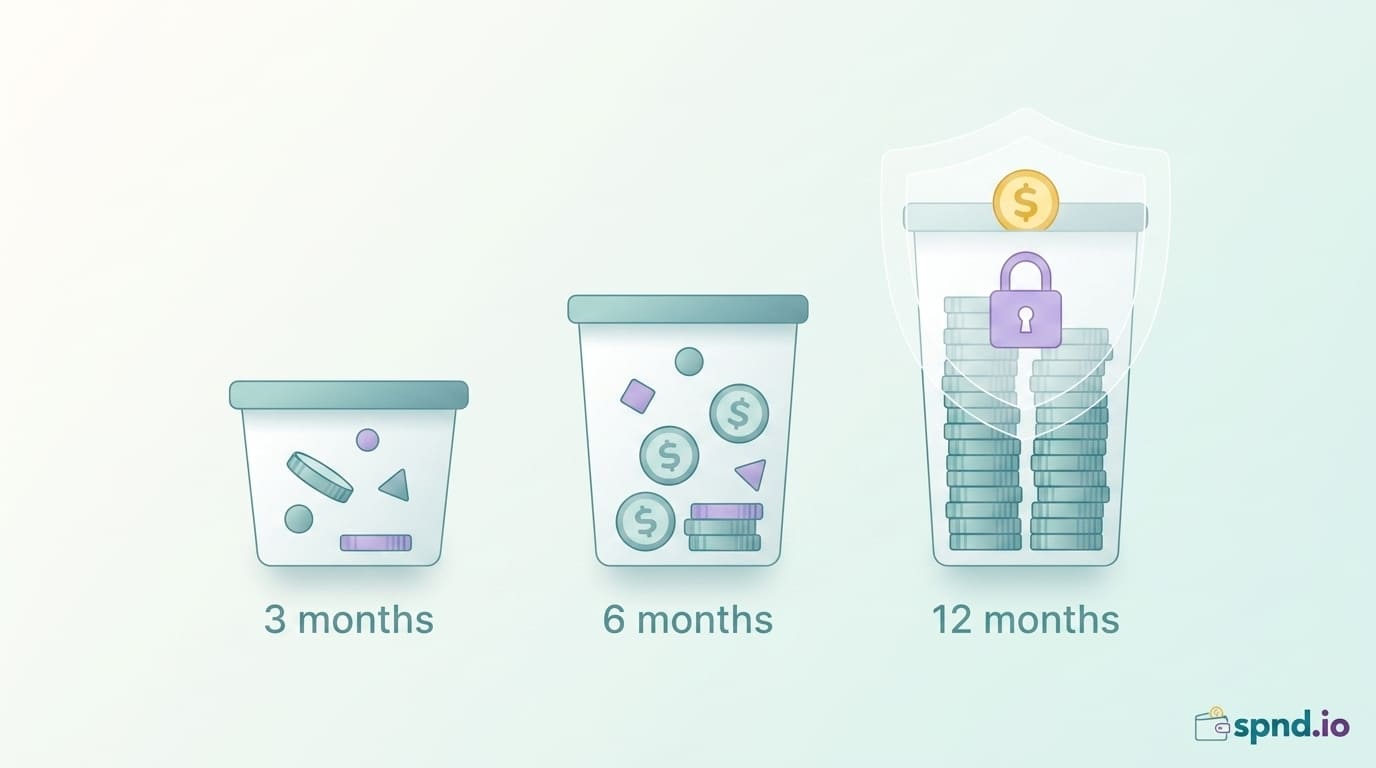
The right emergency fund size depends on your situation: 3 months of essential expenses for dual-income households with stable careers, 6 months for single-income or average-stability situations, and 9-12 months for self-employed, commission-based, or single-earner families with dependents. Calculate on essential expenses only, not total income.

πŸ“… May 12, 2026 Β· πŸ• 3 min read Β· πŸ‘€
Life Insurance Costs by Age: What to Expect in Your 30s, 40s, 50s
Financial Planning

Life Insurance Costs by Age: What to Expect in Your 30s, 40s, 50s

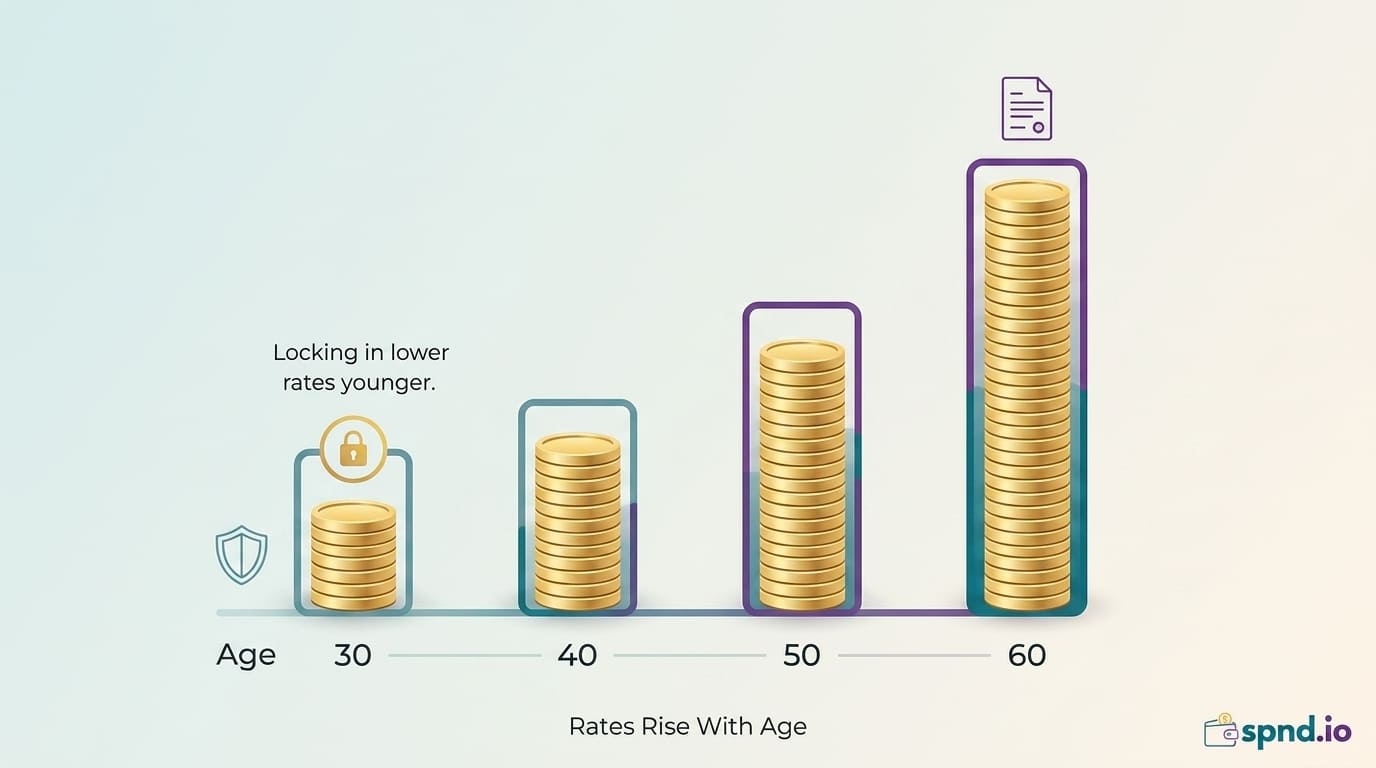
Life insurance costs roughly double every decade. A healthy non-smoker buying $500,000 of 20-year term coverage typically pays $20-30/month at age 30, $35-55/month at age 40, $80-125/month at age 50, and $180-300/month at age 60. Women pay 15-30% less than men at every age due to longer life expectancy.

πŸ“… May 12, 2026 Β· πŸ• 3 min read Β· πŸ‘€
Term vs Permanent Life Insurance: Cost Comparison Guide
Financial Planning

Term vs Permanent Life Insurance: Cost Comparison Guide

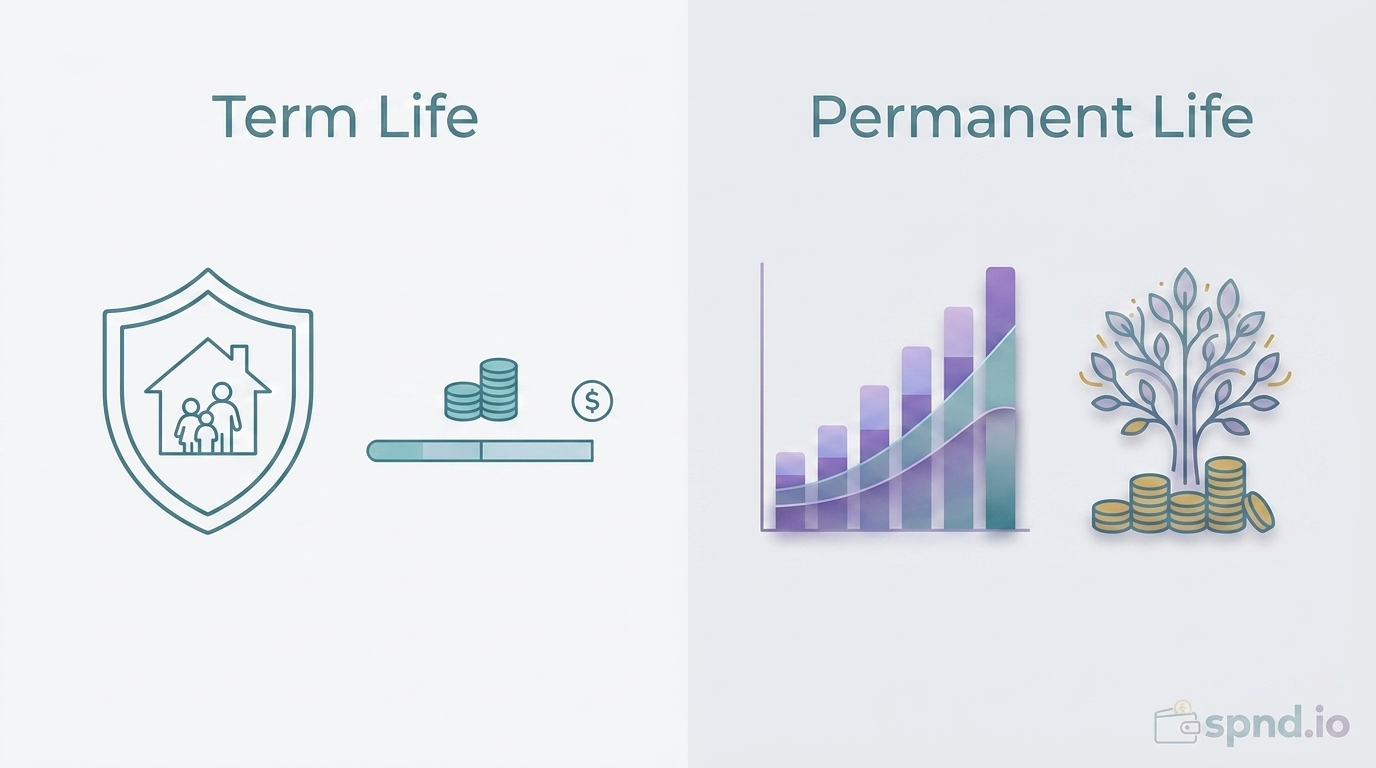
Term life insurance covers you for a fixed period (typically 10-30 years) and is 5-15x cheaper than permanent insurance for the same coverage. Permanent insurance (whole life, universal life) covers you for life and includes a cash value component, but is rarely the right choice for basic family protection. For most families, a 20 or 30-year term policy is the correct answer.

πŸ“… May 7, 2026 Β· πŸ• 3 min read Β· πŸ‘€
How Much Life Insurance Do You Actually Need? (With Calculator)
Financial Planning

How Much Life Insurance Do You Actually Need? (With Calculator)

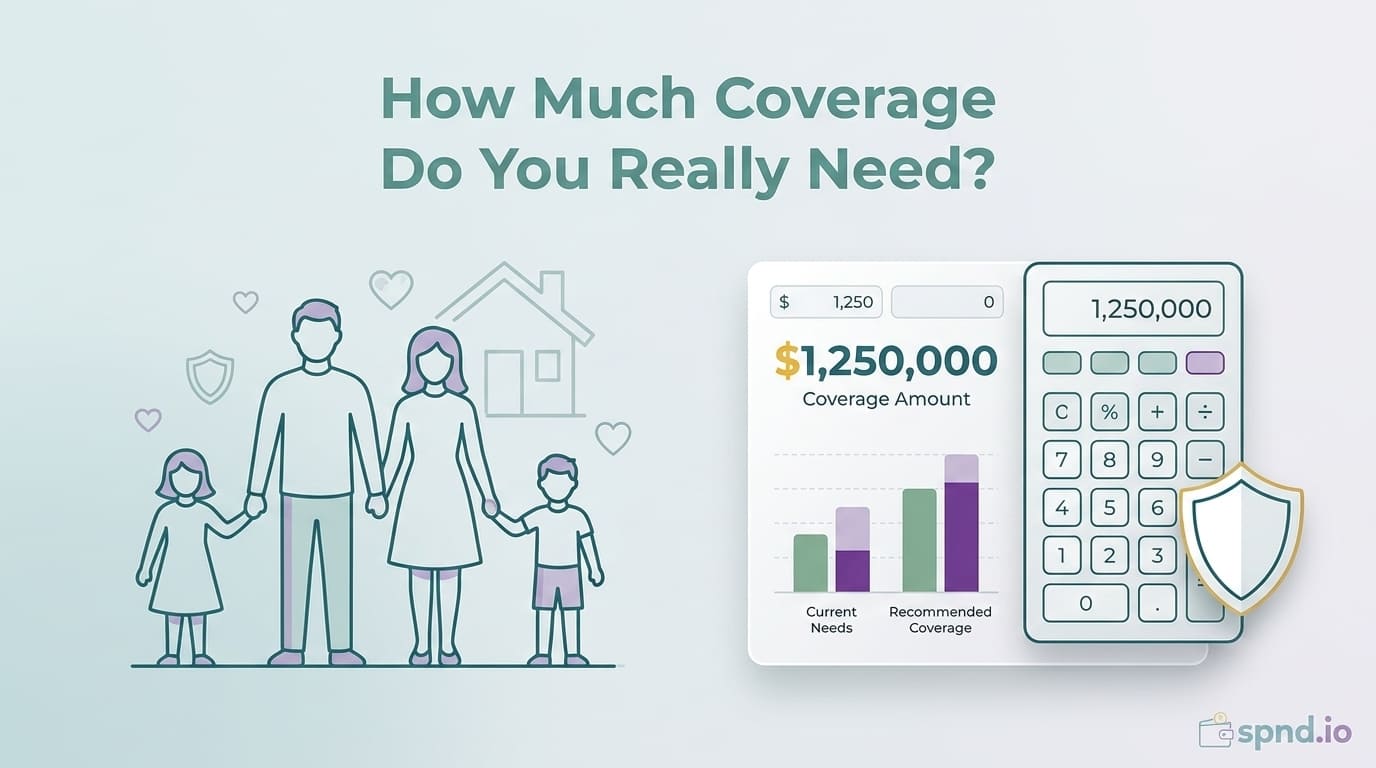
Most financial planners recommend life insurance coverage of 10-12 times your annual income, though the right number depends on your debts, dependents, and goals. For a $75,000 income earner with a spouse, two kids, and a mortgage, appropriate coverage is typically $750,000 to $1.2 million in a 20-30 year term policy.

πŸ“… May 7, 2026 Β· πŸ• 3 min read Β· πŸ‘€
From Habit to Wealth: How Redirecting $5 a Day Builds $30,000+
Habits

From Habit to Wealth: How Redirecting $5 a Day Builds $30,000+

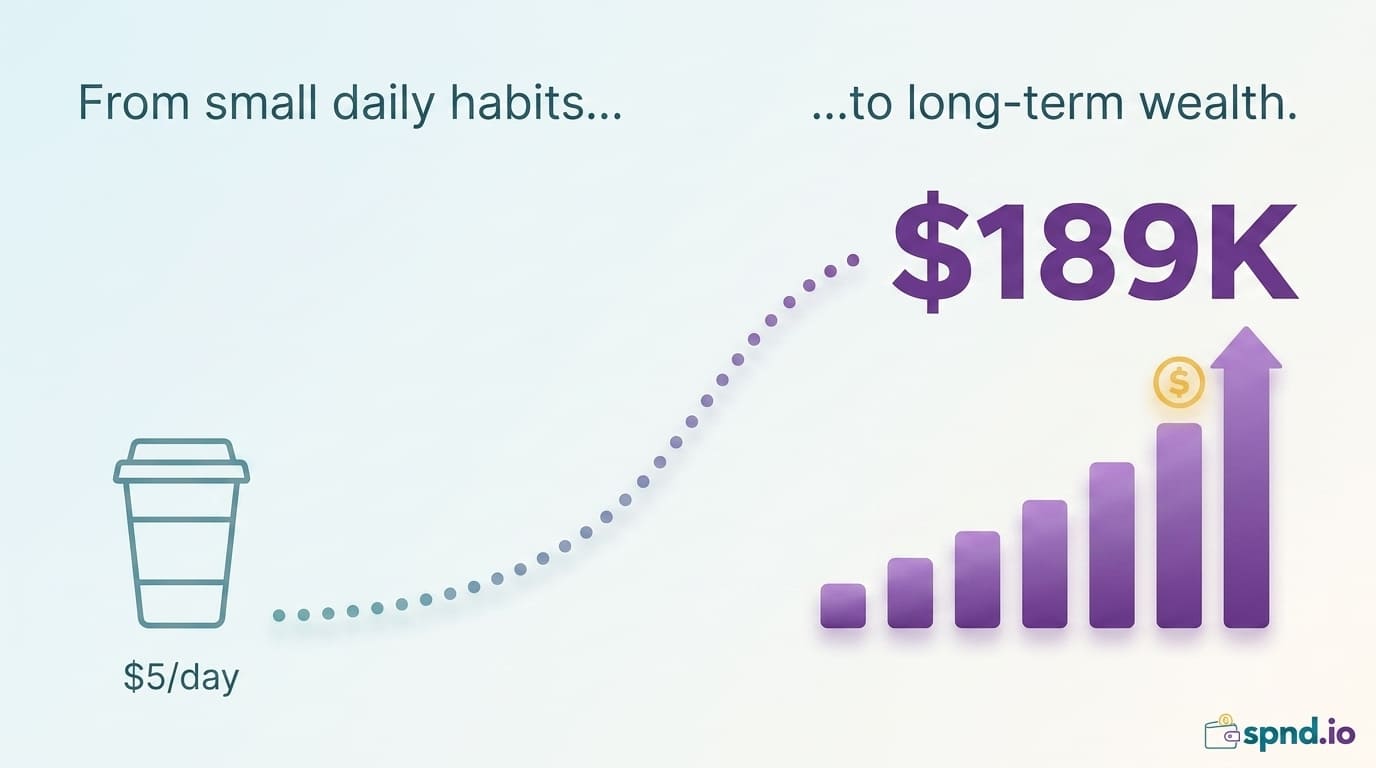
Redirecting just $5 per day into investments at a 7% annual return grows to approximately $26,400 in 10 years, $79,000 in 20 years, and $189,000 in 30 years. The key is consistency and automation β€” the difference between success and failure is not the dollar amount but whether you actually do it every day without deciding each time.

πŸ“… May 7, 2026 Β· πŸ• 3 min read Β· πŸ‘€
Most Expensive Daily Habits Ranked: What You're Really Spending
Habits

Most Expensive Daily Habits Ranked: What You're Really Spending

The most expensive daily habits ranked by annual cost: smoking a pack a day ($3,600-$5,500), daily takeout lunches ($3,000-$4,500), ride-share over transit ($2,000-$4,000), daily premium coffee ($2,000-$3,200), forgotten subscriptions ($400-$1,000), and impulse online shopping ($1,000-$3,500).

πŸ“… May 1, 2026 Β· πŸ• 3 min read Β· πŸ‘€
50/30/20 vs 70/20/10 vs Zero-Based Budgeting: Which Is Right for You?
Budgeting

50/30/20 vs 70/20/10 vs Zero-Based Budgeting: Which Is Right for You?

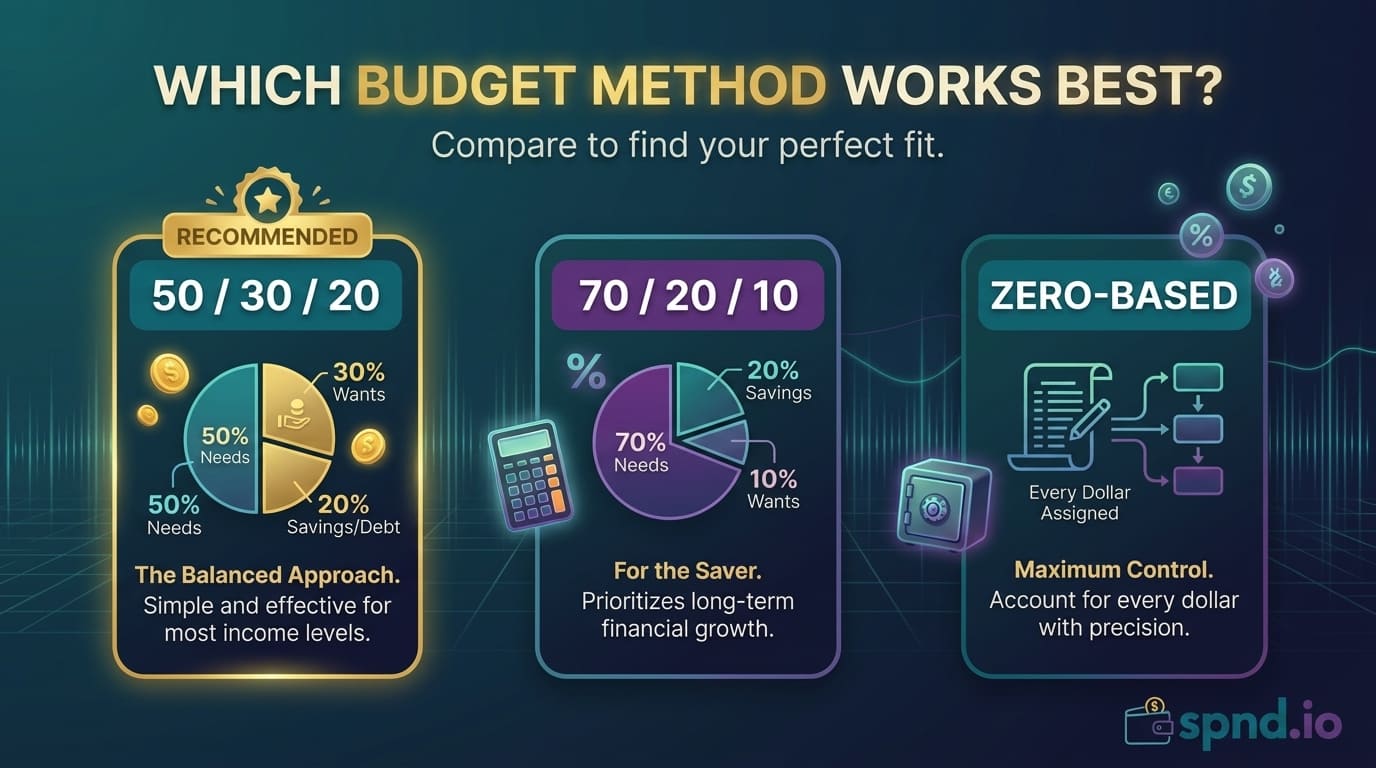
The 50/30/20 rule works best for beginners who want simple structure. Zero-based budgeting works best for detail-oriented people with variable expenses. The 70/20/10 rule works best for people in tight financial situations. Pay-yourself-first works best for automation-focused savers who hate tracking.

πŸ“… May 1, 2026 Β· πŸ• 3 min read Β· πŸ‘€
50/30/20 Budget Categories Explained: What Goes Where
Budgeting

50/30/20 Budget Categories Explained: What Goes Where

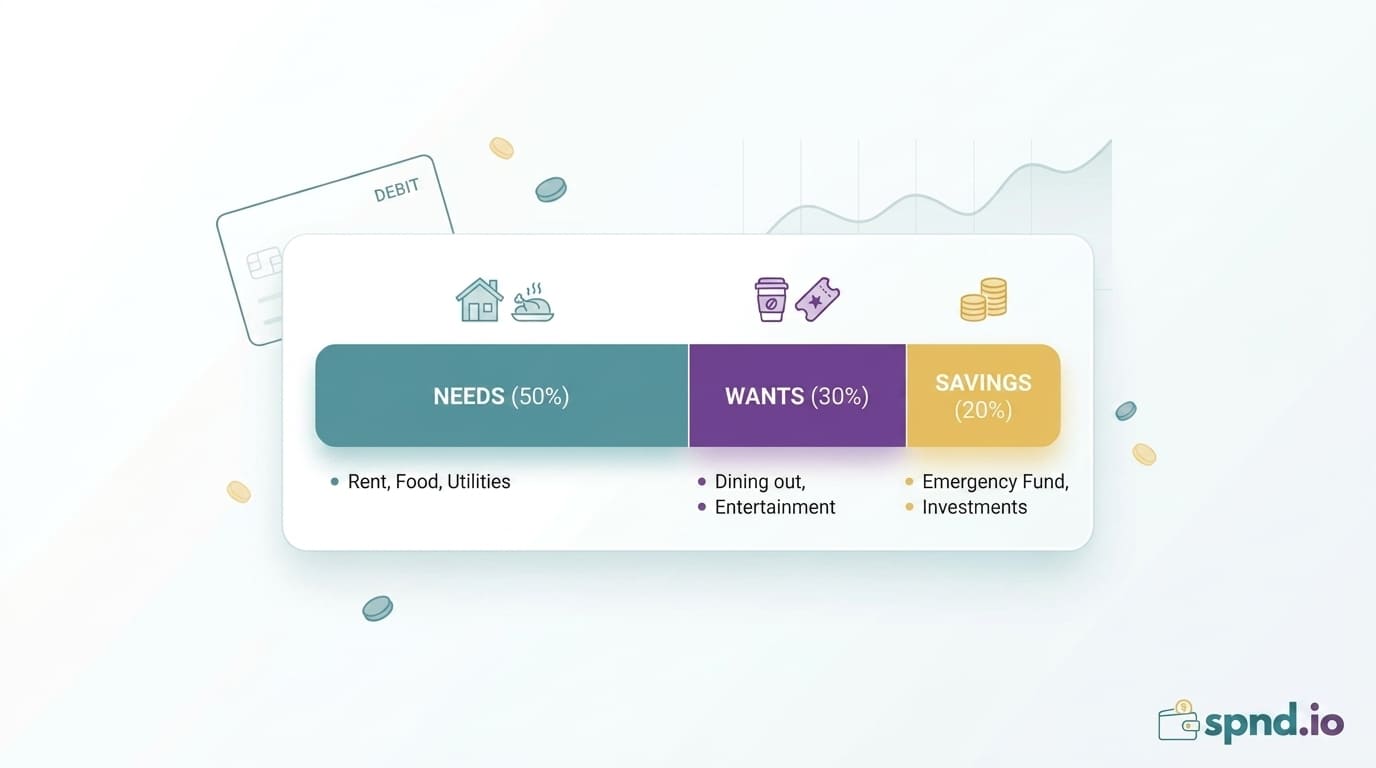
In the 50/30/20 budget rule, needs (50%) are non-negotiable expenses like rent, groceries, utilities, transportation, and minimum debt payments. Wants (30%) are lifestyle expenses like dining out, subscriptions, and hobbies. Savings (20%) includes retirement contributions, emergency fund deposits, and debt payments above the minimum.

πŸ“… May 1, 2026 Β· πŸ• 3 min read Β· πŸ‘€
50/30/20 Rule: Gross or Net Income? The Right Way to Calculate It
Budgeting

50/30/20 Rule: Gross or Net Income? The Right Way to Calculate It

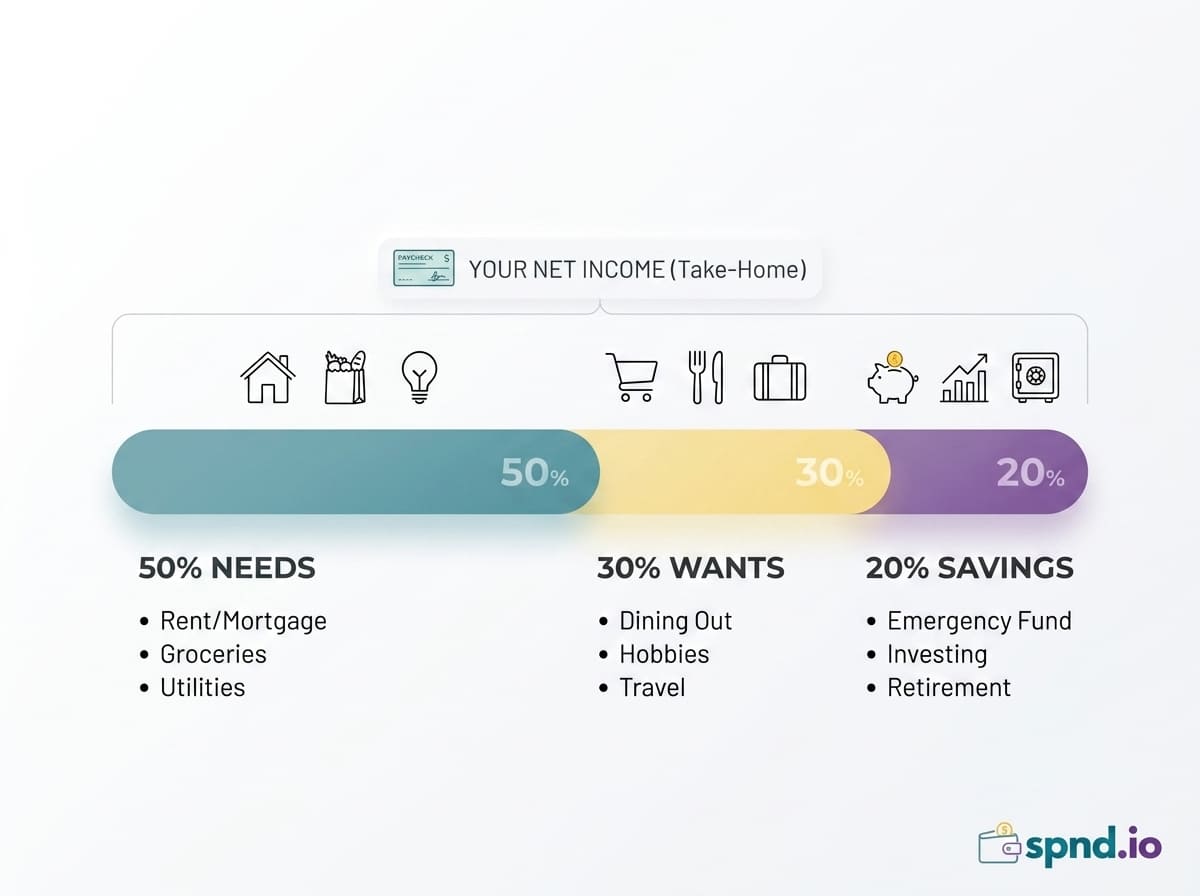
The 50/30/20 budget rule uses net (after-tax) income, not gross. Your net income is your take-home pay after federal tax, state or provincial tax, Social Security or CPP, Medicare or EI, and any other mandatory deductions. Using gross income inflates every category by roughly 20-30% and leads to overspending.

πŸ“… May 1, 2026 Β· πŸ• 3 min read Β· πŸ‘€